Oscar-winning actor Robert Duvall, celebrated for unforgettable roles in The Godfather, Apocalypse Now and To Kill a Mockingbird, has died at the age of 95. He died peacefully on Sunday, 15 February 2026, at his home in Middleburg, Virginia.
His wife, Luciana Duvall, confirmed the news in a statement. “To the world, he was an Academy Award-winning actor, a director, a storyteller. To me, he was simply everything,” she said. “His passion for his craft was matched only by his deep love for characters, a great meal, and holding court.” She added that he “gave everything to his characters and to the truth of the human spirit they represented”, and thanked fans for their years of support.
As the news spread, tributes poured in from across Hollywood and the wider film world, honouring a career that stretched across more than six decades.
Hollywood pays tribute
Adam Sandler, who worked with Duvall on the 2022 basketball drama Hustle, shared photos from the set. “Funny as hell. Strong as hell. One of the greatest actors we ever had. Such a great man to talk to and laugh with,” he wrote. “So many movies to choose from that were legendary. Watch them when you can.”
Al Pacino, his co-star in The Godfather films, said: “He was a born actor as they say, his connection with it, his understanding and his phenomenal gift will always be remembered. I will miss him.” Robert De Niro kept it short: “God bless Bobby. I hope I can live till I’m 95. May he rest in peace.”
Francis Ford Coppola, who directed him in The Godfather, The Conversation and Apocalypse Now, called his death “a blow”, describing him as “such a great actor and such an essential part of American Zoetrope from its beginning”.
Viola Davis, who starred alongside him in Widows, said she had always been “in awe of your towering portrayals of men who were both quiet and dominating in their humanness. You were a giant… an icon.” Jamie Lee Curtis posted a picture of him as Tom Hagen with the words: “The greatest consigliere the screen has ever seen. Bravo, Robert Duvall.”
Walton Goggins, who appeared in The Apostle, called Duvall “my friend. My mentor” and “my North Star, my hero”, while Michael Keaton remembered “a great afternoon on my front porch talking about horses”.
British actress Jane Seymour, his co-star in The Stars Fell on Henrietta, recalled sharing “his love of barbecue and even a little tango”, saying the moments off camera “were just as memorable as the work itself”. Robert Patrick, who played his son in Jayne Mansfield’s Car, said he was “gutted” and would always be proud to have played Duvall’s son.
A career that defined generations
Born on 5 January 1931 in San Diego, California, Duvall began in New York theatre before moving into film. His screen debut came in 1962’s To Kill a Mockingbird, playing the reclusive Boo Radley. He did not speak a single line, yet the performance left a lasting mark. “He used not a single word of dialogue, not a single word, and he just shatters you,” Alec Baldwin said in his own tribute.
In 1965 he won an Obie Award for his off-Broadway role in A View from the Bridge, followed by his Broadway debut in Wait Until Dark. Through the 1960s he built his reputation as a commanding character actor, appearing in films such as Bullitt and later M*A*S*H.
His breakthrough came in 1972 as Tom Hagen, the adopted son and consigliere of the Corleone family in The Godfather. The role earned him his first Academy Award nomination and made him a Hollywood heavyweight. He returned as Hagen in The Godfather Part II, cementing the character’s place in film history.
“I love the smell of napalm in the morning”
A few years later he delivered one of cinema’s most quoted lines. As the surf-obsessed Lieutenant Colonel Bill Kilgore in Apocalypse Now (1979), he had only a few minutes of screen time, but “I love the smell of napalm in the morning” became legendary. Duvall later said he had toned down a character who was originally written to be even more extreme. “I did my homework. I did my research,” he told Larry King in 2015.
The same era brought a ruthless television executive in Network and a bullying Marine pilot in The Great Santini, showing the range that made directors trust him with very different men.
Oscar glory with Tender Mercies
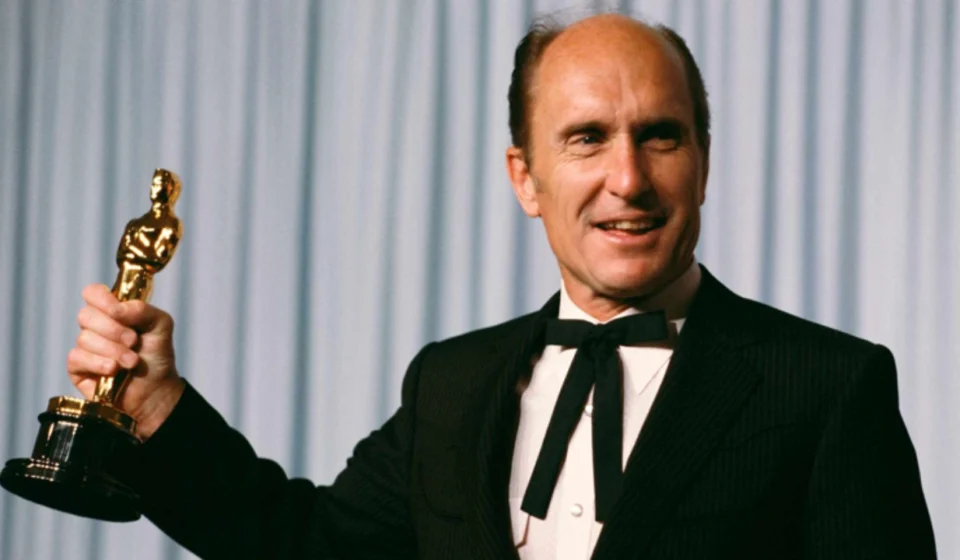
Over his career, Duvall received seven Academy Award nominations. He won Best Actor for Tender Mercies, playing a washed-up, alcoholic country singer searching for redemption. The screenplay was written by Horton Foote, who had also written To Kill a Mockingbird, and the performance is still regarded as one of the most quietly moving in American film.
He often said that his favourite role was Augustus “Gus” McCrae, the Texas Ranger turned cowboy in the 1989 television miniseries Lonesome Dove. In 1997 he wrote, directed and starred in The Apostle, playing a troubled preacher, a passion project he financed himself. Later roles included The Judge alongside Robert Downey Jr., which brought him another Oscar nomination.
The man behind the roles
Off screen, Duvall was known for his love of horses, barbecue and dancing, especially the tango. He lived for many years on a farm in rural Virginia with Luciana, whom he married in 2005. Friends described a warm, funny man who enjoyed good food and long conversations as much as his work.
He approached acting with an almost documentary-like commitment to truth. He researched his characters in depth, avoided showy tricks and believed that the best performances came from real observation of people. That approach influenced generations of actors who studied his work, and many of the tributes after his death came from performers who said they had learned simply by watching him on set.
An enduring legacy
Robert Duvall’s career spanned more than 60 years, in which he played soldiers, lawyers, outlaws, preachers and ordinary men with extraordinary depth. Known for his quiet intensity and emotional precision, he brought authenticity to every role he took on.
His death marks the end of an era for Hollywood, one defined by powerful storytelling and unforgettable performances. His Godfather co-star Al Pacino continues to reflect on what keeps great actors working, and you can read his thoughts in our piece on Al Pacino reflecting on fame, failure and why artists should never stop creating.
Duvall’s legacy lives on through films that continue to inspire actors and audiences alike. As Viola Davis put it: “Greatness never dies. It stays… as a gift.”
About the Author