Bad Bunny Super Bowl halftime show
The row over Bad Bunny’s historic Super Bowl halftime show has taken a new turn. After several conservative politicians demanded an investigation into the performance, the Federal Communications Commission (FCC) has looked at what was actually said on air and found nothing that breaks its rules.
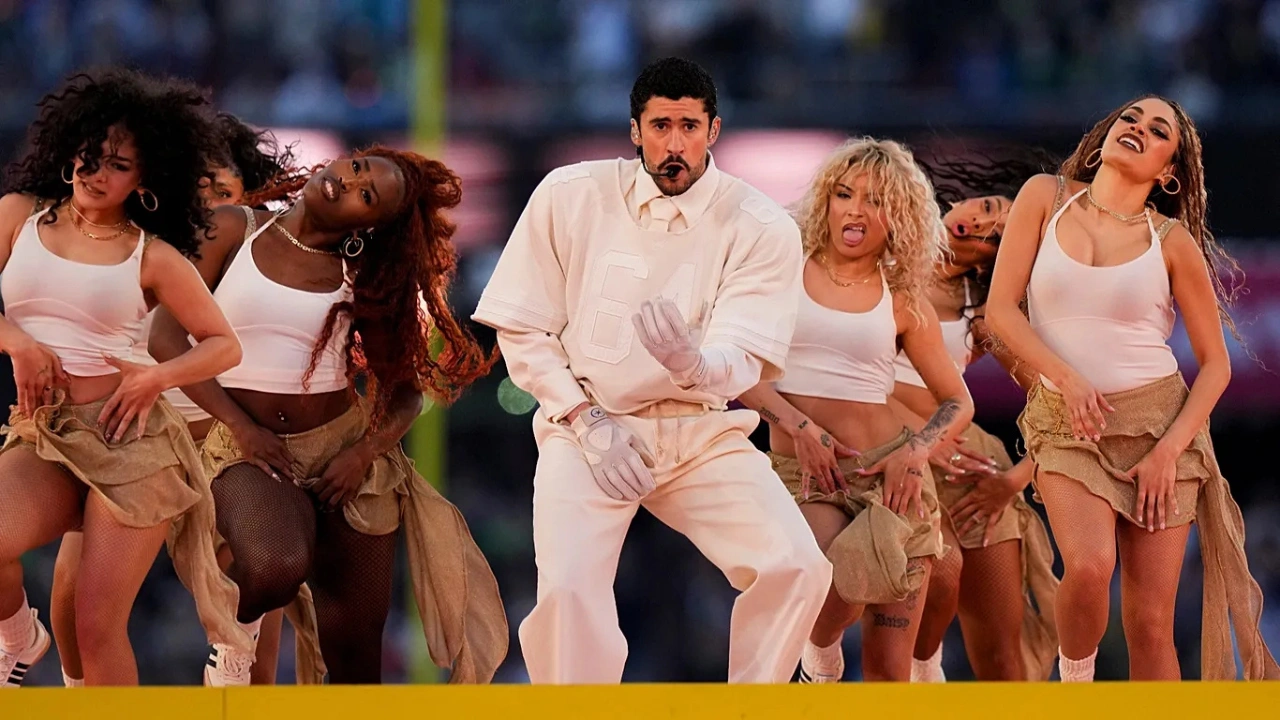
The Puerto Rican superstar headlined the Super Bowl LX halftime show at Levi’s Stadium in Santa Clara, California, on 8 February 2026. His set was performed almost entirely in Spanish and celebrated Latin music, Puerto Rican history and the wider culture of the Americas, with surprise appearances from Lady Gaga and Ricky Martin. For millions of viewers it was a landmark moment. For some critics, it became a political flashpoint.
The calls for an investigation
President Donald Trump attacked the show on social media on the night of the game, calling it “absolutely terrible” and “an affront to the Greatness of America”. He had earlier complained that “nobody understands a word this guy is saying”. His comments helped fuel a wider backlash among Republican lawmakers.
Tennessee congressman Andy Ogles called the performance “pure smut” and alleged that it breached broadcast decency standards. In a letter to Brett Guthrie, the chair of the House Energy and Commerce Committee, he asked for a “formal congressional inquiry” into both the National Football League and NBCUniversal, which aired the game, over what he claimed was their “prior knowledge, review, and approval” of the show. He singled out the song “Safaera”, arguing that its original lyrics contain explicit content, even though the televised version cut or blurred the strongest language.
Florida congressman Randy Fine went further. In a letter to Brendan Carr, the chairman of the FCC, he described the show as “woke garbage” and argued that more than 130 million viewers, including children, had been exposed to vulgar content. On social media, he called for fines and broadcast licence reviews against the NFL, NBC and the singer himself. Fine also pointed to a lyric from Bad Bunny’s song “NUEVAYoL”, interpreting it as a coded drug reference, a reading that sparked further debate online.
What the FCC found
According to reports, the FCC asked NBC for transcripts of the performance after the complaints were made. FCC commissioner Anna Gomez said she had reviewed them and found “no violation of our rules and no justification for harassing broadcasters over a standard live performance”.
The broadcast versions of songs such as “Tití Me Preguntó”, “Monaco” and “Safaera” had been edited to remove explicit lyrics before they reached viewers. Reporters fluent in Spanish who reviewed the show also noted that many of the explicit lines quoted by critics came from the full recorded songs rather than from what was actually performed, and that Bad Bunny often skipped or cut off the offending words on stage. Reports said the FCC had shelved any further scrutiny unless new evidence came to light.
In other words, the investigation that critics wanted ended almost as soon as it began. Language alone, it turns out, is not a breach of broadcast rules.
Not the first halftime row
Super Bowl halftime shows have a long history of upsetting someone. The most famous case came in 2004, when Janet Jackson’s brief “wardrobe malfunction” during her performance with Justin Timberlake led to a flood of complaints and an FCC fine against CBS, which was later thrown out by the courts. That episode made broadcasters far more cautious, and live broadcasts now routinely use short delays and edits to remove anything that might break the rules.
That is exactly what happened here. The explicit lines critics complained about never made it to air, which is why the FCC review found so little to act on. In that sense, the system worked as intended, and the complaints were more about taste and politics than about broadcast law.
Obama: “It wasn’t preaching. It was showing”
Not everyone in politics was critical. Former president Barack Obama offered a very different view in an interview with YouTuber Brian Tyler Cohen, praising the show’s cultural representation. He said it worked because it celebrated community rather than delivering a political message.
“It wasn’t preaching. It was showing,” Obama said, pointing to scenes of families and different generations celebrating together. He described the performance as a reminder of what Dr Martin Luther King Jr called “the beloved community”: imperfect, but united.
A Grammy-winning year
The halftime show capped an extraordinary few weeks for the 31-year-old artist, whose real name is Benito Antonio Martínez Ocasio. A week before the Super Bowl, his album Debí Tirar Más Fotos won Album of the Year at the Grammy Awards, a huge milestone for a record sung in Spanish. He used his acceptance speech to criticise the Trump administration’s immigration enforcement policies, which partly explains why his Super Bowl booking was already so politically charged.
The NFL, which chose Bad Bunny alongside Jay-Z’s Roc Nation, has been working hard to grow its audience in Latin America and among Spanish-speaking fans in the US. From a business point of view, picking one of the most-streamed artists on the planet made complete sense.
Puerto Rico on the biggest stage
Part of the controversy came from confusion, or deliberate misreading, about who Bad Bunny is. Puerto Rico is a US territory, and Puerto Ricans are American citizens. Critics who described the show as “un-American” were, in effect, objecting to an American citizen performing in his first language.
The show itself leaned into that identity. It touched on the island’s history and its complicated relationship with the mainland, and included flags from across the Americas. Ricky Martin, one of the first Puerto Rican stars to break through in the US mainstream, joined him on stage, while Lady Gaga performed a salsa-style version of “Die With a Smile”.
Culture, language and belonging
While critics argue about broadcast standards and lyrics, supporters see the performance as a landmark for Spanish-language music on one of America’s biggest stages. The debate reflects wider tensions around culture, language and representation in mainstream entertainment, and over who gets to define what is “American”.
Music has a long history of sparking political arguments, and Bad Bunny is far from the first star to find himself in the middle of one. Our look at Kanye West’s controversies, from music icon to constant backlash shows how quickly a performer’s public image can become a battleground. The difference here is that Bad Bunny’s “controversy” was simply singing in his own language.
As the dust settles, the halftime show remains one of the most talked-about Super Bowl performances in recent memory, not only for its music but for the national conversation it started. And with the FCC finding no violation, the attempt to punish it appears to have come to nothing.
About the Author