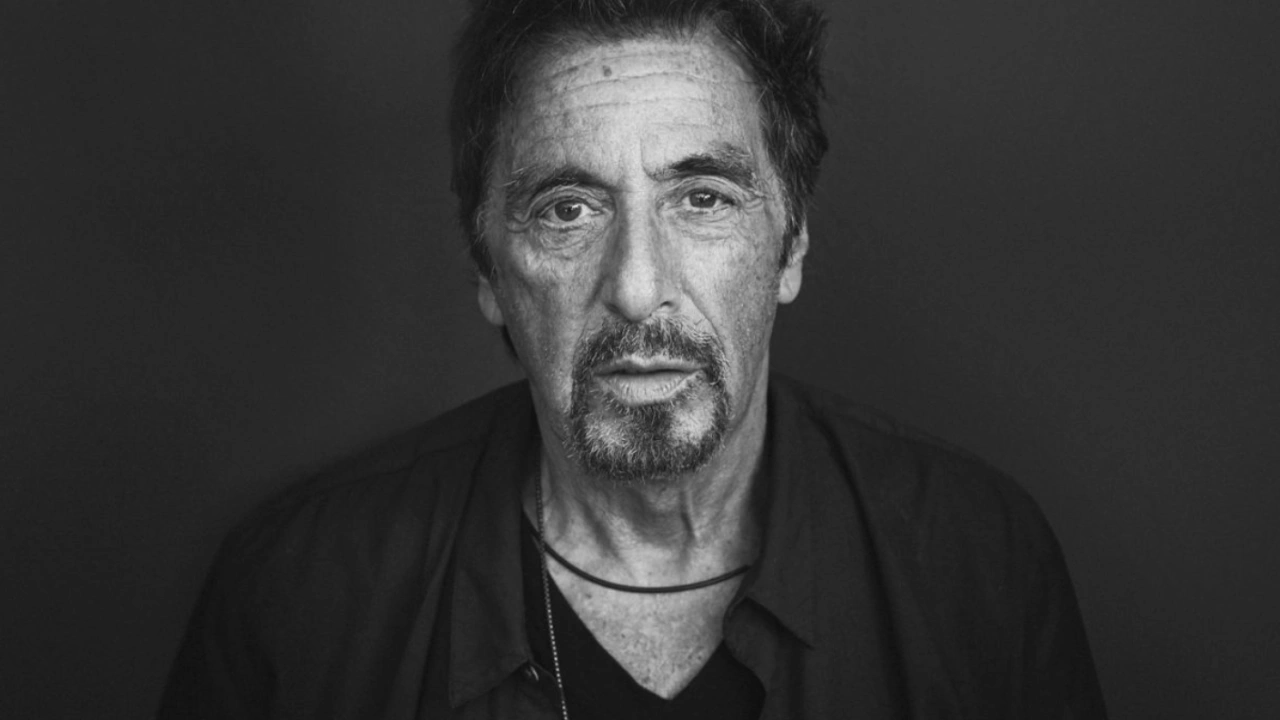
Al Pacino
Al Pacino has spent more than half a century building one of the most celebrated careers in cinema, yet the Oscar-winning actor says he has never thought of his performances as trophies to protect. For him, the work itself matters far more than legacy, fame or even success.
In a reflective interview with the magazine The Talks, Pacino spoke candidly about ageing, vulnerability, risk and the mistakes that shaped his career. From the blockbuster he turned down to his discomfort with the word “artist”, he revealed a side of himself rarely seen behind the larger-than-life image audiences know from The Godfather, Scarface and Scent of a Woman.
“You don’t think of those parts as achievements”
Asked how he deals with the weight of his own achievements, Pacino brushed the idea aside. “You don’t think of it that way,” he said. “You don’t think of those parts as achievements. You think of the roles you play, the paintings you’ve made.”
He then turned the question into a joke. Imagine, he said, an actor announcing that he could not do better than his last film and might as well quit. “We’d call that resting on your laurels and I guess you’re not supposed to do that. I’m all for that! You know, resting on your laurels, you get a nice big check, take another profession on… But for some thick reason, I keep wanting to go back and do this stuff.”
That “thick reason” is the thread running through the whole conversation. Pacino keeps acting not to beat his past, but because each new role offers another chance to find something true.
Holding the mirror up to nature
What draws him to a project, he explained, is the feeling that he can contribute something and say something through it, “whatever that means”. He reached for Shakespeare to describe it, saying the aim is to “hold as it were the mirror up to nature”, a line from Hamlet’s advice to the players.
“If I’m expressing something that I feel is a way to exercise my talent and help to communicate a role, a human being in a movie, I will try doing it,” he said. It is a modest way of describing a craft that has earned him an Academy Award, for Scent of a Woman, and many more nominations.
A strange word for an artist
That desire is also why he is wary of talking about stopping. “I’m not going to say the word ‘retirement’ because it’s kind of a strange word for an artist to say,” he said.
When the interviewer quoted the artist Christo, who said that artists don’t retire, they just die, Pacino offered a counterexample. “There are artists that have retired. Like Philip Roth. I did a movie of his book The Humbling. He has quit writing and he’s very happy! So he says.”
He admitted he could understand that choice, because the job can become routine. “You get the script, you’ve got to read the script, you’ve got to learn the script. You have to go through that process again.” What keeps him going, he said, are “the other things, like a director who wants to use you”.
Before The Godfather, nobody wanted him
That point led to one of the most revealing moments of the interview. Today it is hard to imagine a director who would not want Al Pacino, but it was not always so.
“Before The Godfather, the first Godfather, nobody else wanted me. But Francis wanted me!” he recalled, referring to Francis Ford Coppola. “He just wanted me, and I didn’t understand it… The studios didn’t want me, nobody wanted me, nobody knew me.”
Coppola’s stubborn faith in a little-known stage actor changed his life. Pacino’s performance as Michael Corleone in the 1972 film made him a star, and it shaped his attitude to risk ever since. “I think when a director is interested, I have a tendency to lean forward instead of backing off,” he said. “You’re looking for a risk you can take, a challenge, the fact that you fall down and get up and go on.”
The Godfather also brought together a remarkable generation of actors, including Robert Duvall as the family consigliere Tom Hagen. For a look back at Duvall’s own extraordinary career, read our piece on how Hollywood paid tribute to Robert Duvall.
“You can’t let your skin get too thick”
Why keep seeking out risk after so many years? Pacino’s answer was about staying open. “When you do it long enough, you want to keep yourself open. You don’t want to close off because vulnerability is important. You can’t let your skin get too thick.”
He pointed to Bertolt Brecht, who wrote the play In the Jungle of Cities as a young man. One of its characters says: “Man’s skin is too thin for this world.” Over time, Pacino explained, that skin “grows thicker and thicker, until finally he is bumping into things and not feeling them anymore”. For an actor, losing the ability to feel is the real danger.
The museum of mistakes
Pacino was equally frank about the choices that did not work out. “I don’t regret anything,” he said. “I feel that I’ve made what I would call mistakes. I picked the wrong movie, or I didn’t pursue a character or I played somebody and made some choices… But everything you do is a part of you. And you get something from it.”
Some of those choices are famous. Asked about turning down Star Wars, in which he was offered the role of Han Solo that went to Harrison Ford, he replied: “Yeah, that was my first big mistake.”
He also regrets passing on a film by Terrence Malick. “A long time ago Terry wanted me to be in a movie, and I always wished… There’s another one of my many mistakes. They’re in the museum of mistakes! All the scripts I rejected!”
Image, age and the word “artist”
Pacino also spoke about the odd position actors occupy. Asked whether he was enjoying this stage of his life, he was honest: “There are days when I really do enjoy it. But there are days when not.” He said we all go through cycles, and age is about that.
He added that a painter would never be questioned about his age in the same way, and that actors are tied to their image no matter how many different characters they play. That makes calling yourself an artist awkward. Early on, he recalled, a woman he lived with told him: “Whatever you do, don’t tell them you’re an artist.” He has avoided it ever since, though he admits: “I think I’m an artist. I hope I am.”
The alternative is no better. “That’s pretentious, too: I’m a movie star!” he said, before summing up the dilemma with typical bluntness: “So what the fuck do you say?”
Still searching
The interview took place in 2015, but Pacino’s words have aged well. He has kept working into his eighties and published his memoir, Sonny Boy, in 2024. Through every cycle, the same idea holds: creativity, for Pacino, is about staying vulnerable, taking risks and continuing to search for something honest inside the work.
Interview credit: The Talks
About the Author