AFrederick Wiseman
Frederick Wiseman, one of the most influential figures in documentary cinema, has died at the age of 96. His death on 16 February 2026 was announced in a joint statement from his family and Zipporah Films, the company through which he produced and distributed his work. He died peacefully at his home in Cambridge, Massachusetts.
Over a career spanning nearly six decades, Wiseman built an extraordinary body of films examining the inner workings of American and, later, French institutions. His documentaries became immersive portraits of social systems, capturing the rhythms of everyday life in places that are often overlooked or misunderstood.
“An unparalleled body of work”
In their statement, his family and Zipporah Films described his legacy as “an unparalleled body of work, a sweeping cinematic record of contemporary social institutions and ordinary human experience primarily in the United States and France”. They highlighted how his films, from Titicut Follies in 1967 to his final feature, Menus-Plaisirs – Les Troisgros in 2023, were celebrated “for their complexity, narrative power, and humanist gaze”.
Wiseman produced and directed all 45 of his films under the Zipporah Films banner, a company named after his wife, Zipporah Batshaw Wiseman, to whom he was married for 65 years until her death in 2021. He is survived by his sons, David and Eric, and three grandchildren. The family said a private funeral would be held and asked that, in lieu of flowers, people support their local PBS station or an independent bookshop in his memory.
From law school to the camera
Born in Boston on 1 January 1930, Wiseman did not start out as a filmmaker. He studied at Williams College and Yale Law School and taught law before turning to cinema in the mid-1960s. That background helps explain his lifelong fascination with institutions: the rules, hierarchies and routines that shape how people are treated.
His breakthrough, Titicut Follies, offered an unflinching look inside a Massachusetts state hospital for the criminally insane. It was so disturbing that the state went to court to restrict its showing, and for decades it could only be seen by limited audiences. The controversy established Wiseman as a filmmaker who would not look away.
Institutions as mirrors of society
In the years that followed, he turned his camera on almost every part of public life. He filmed schools in High School, police in Law and Order, welfare offices in Welfare, a hospital, a zoo, a ballet company and a monastery. He made films about the Comédie-Française, the diverse New York neighbourhood of In Jackson Heights, the New York Public Library in Ex Libris, and the small farming town of Monrovia, Indiana.
Each film worked as both a close-up and a mirror. By spending weeks inside a single place, he revealed broader truths about the society around it: how power works, how people care for each other, and how systems succeed or fail the people they are meant to serve.
His later films, including At Berkeley, National Gallery and City Hall, showed that his curiosity never faded. Many of them ran for three or four hours, a length that might sound daunting but which allowed viewers to sink into a place in a way few documentaries do.
“Reality fictions”
Although his work is often described as “observational” or linked to cinéma vérité, Wiseman resisted easy labels. He avoided voiceovers, interviews, music and staged scenes, relying on natural light and real sound. He did, however, insist that his films were shaped by careful editing, and he liked to call them “reality fictions” to reflect the storytelling choices he made in the cutting room.
He typically shot far more footage than he could use, then spent many months editing it into a structure. The result was a style that felt effortless on screen but was built with great precision. Audiences were never told what to think. Instead, they were trusted to watch, listen and draw their own conclusions.
A tiny crew and a microphone
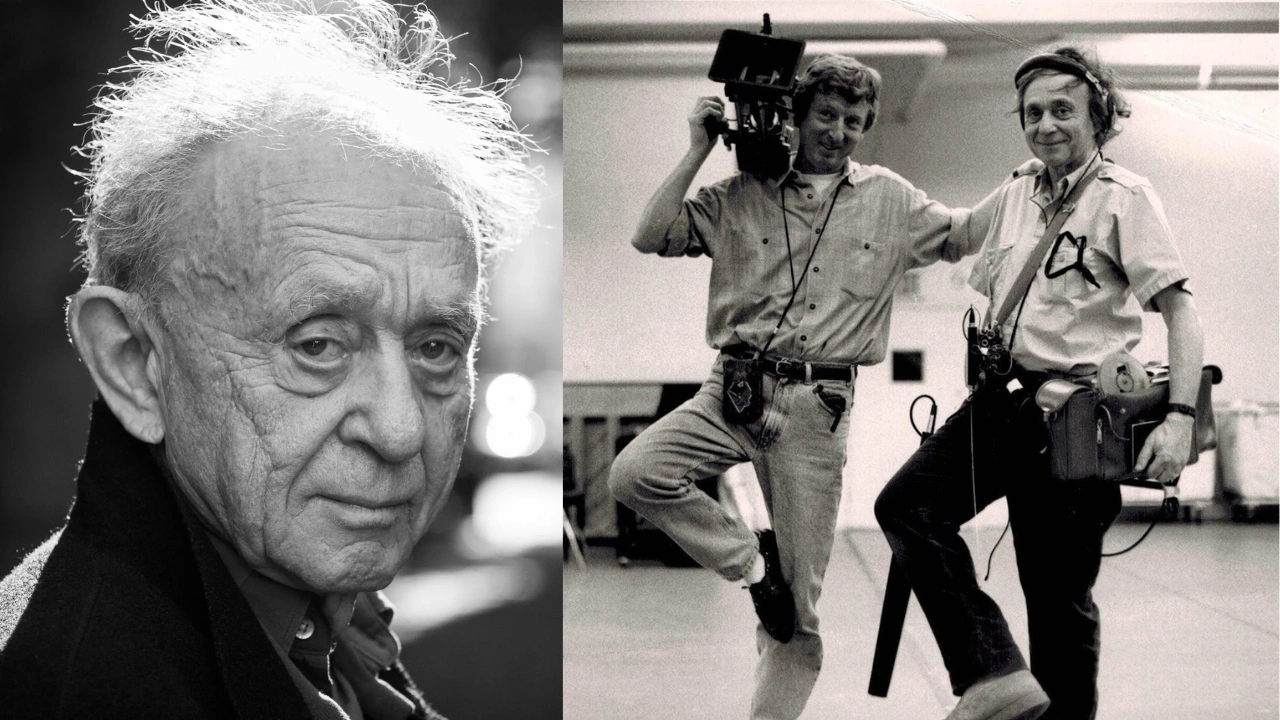
Part of what made Wiseman’s films feel so intimate was how lightly he worked. He usually filmed with a very small crew, often just a cinematographer and an assistant, and he recorded the sound himself, holding the microphone and deciding in the moment where the camera should point. That kept him in the middle of every scene and let people grow used to his presence, so they behaved naturally.
His work was not limited to cinema, either. His family’s statement described him as a “filmmaker, producer, and theater director”, and he staged theatre productions alongside his films, bringing the same patience and attention to human behaviour to the stage.
Honours and recognition
His contribution to cinema earned recognition around the world. In 2014 he received the Golden Lion for Lifetime Achievement at the Venice Film Festival. Two years later he was given an Honorary Academy Award, a rare honour for a documentary maker. He was also a MacArthur Fellow, and festivals across Europe regularly showcased his films, often treating each new release as an event. As recently as 2024, his 1969 film Law and Order was presented at the Cannes Film Festival in its Cannes Classics section.
A final film about food and family
His last film, Menus-Plaisirs – Les Troisgros, explored a celebrated French restaurant and the generations of chefs who have sustained it. The four-hour documentary was widely praised for its warm, life-affirming tone and meticulous craft, and it confirmed Wiseman’s reputation as a master observer of human dedication.
It was a fitting farewell. Wiseman had spent much of his later life in France, which he considered one of his homes alongside Cambridge and Northport in Maine. A film about craftsmanship, family and patience felt like a summary of his own approach to filmmaking.
In a 2023 interview, he described documentary work as an ongoing adventure. Even in his nineties he remained energised by filming and editing, explaining that total immersion in a subject made the process deeply rewarding.
A loss for cinema
News of his death came just a day after the passing of another giant of American film, Robert Duvall. You can read our tribute in Robert Duvall dies at 95 as Hollywood pays tribute.
Wiseman’s influence on younger filmmakers is hard to measure, but it is everywhere. His patient, non-judgemental style shaped how documentaries are made and how audiences understand them. Many directors who never met him learned from watching his films, which remain a towering archive of modern life: patient, probing and deeply humane.
With his passing, the world loses a true pioneer of nonfiction storytelling. But his films remain, and they will keep showing viewers how ordinary places and ordinary people can reveal the extraordinary.
About the Author