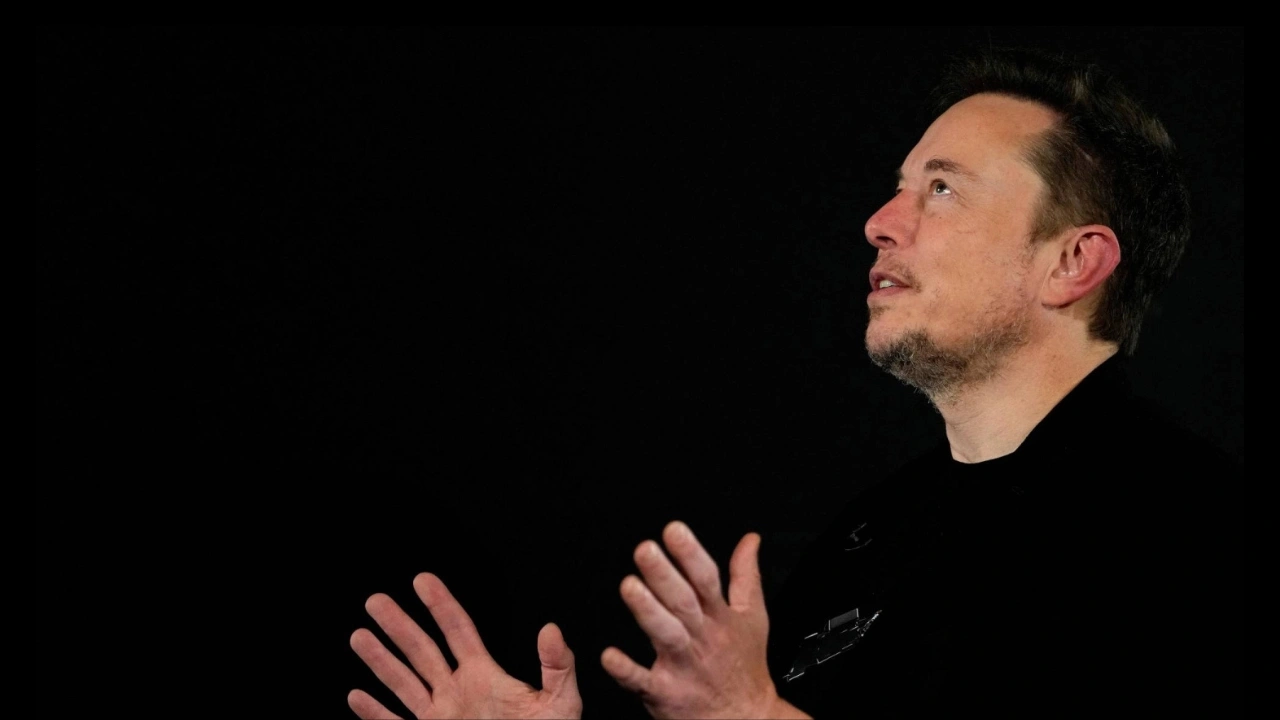
Elon Musk
Few entrepreneurs have shaken up as many industries as Elon Musk. Electric cars, reusable rockets, satellite internet, artificial intelligence: he has put his name and money behind all of them, often at a point when most people thought the idea was a long shot. Love him or not, he has become one of the most influential business figures of the 21st century, and his ambitions go well beyond running profitable companies. He talks openly about solving big, species-level problems, and that story is a large part of why so many young founders look up to him.
His influence now runs through transportation, energy, aerospace, communications and emerging technology. He is known around the world as a businessman willing to take risks that others wrote off as impossible, and as someone who rarely stays quiet about it.
A journey built on new ideas
Musk was born in 1971 in Pretoria, South Africa, and showed an interest in computers early on. As a boy he taught himself to code and sold a simple video game he had written. He left South Africa as a teenager, moved to Canada and studied at Queen’s University before transferring to the University of Pennsylvania, where he earned degrees in physics and economics.
He arrived in Silicon Valley just as the internet boom was taking off. His first company, Zip2, made online city guides for newspapers and was sold in 1999. He then co-founded X.com, an online payments business that merged with a rival and became PayPal, which eBay bought in 2002. The money from those deals funded what came next.
Instead of following a safe path, Musk chose industries that had barely changed in decades. His thinking has stayed fairly consistent ever since: pick a huge problem, then try to build the technology that solves it, even if it takes years and burns through a lot of cash along the way.
That approach has produced several companies that are now household names, each with a mission that stretches far into the future.
Shaking up the car industry
His best-known achievement is probably helping to push the world towards electric cars through Tesla. He was an early investor and chairman, joined in 2004, and later became chief executive.
Not so long ago, electric vehicles were seen as niche products with limited range and little appeal. Tesla showed that a clean car could also be fast, packed with technology and genuinely desirable, starting with the Roadster and then the Model S.
Today, almost every major carmaker has borrowed something from Tesla’s playbook. Driver assistance systems, over-the-air software updates, better battery efficiency and cars that work like connected devices are now common across the industry. Europe has felt this directly: Tesla’s factory at Grünheide, near Berlin, opened in 2022 and builds cars for the European market.
Beyond the cars themselves, Tesla keeps putting serious money into battery technology, home and grid energy storage, and charging infrastructure.
Reaching beyond Earth
The other defining chapter of his career is SpaceX, which he founded in 2002 and which has changed the economics of space travel.
Reusable rockets were once seen by many experts as extremely hard to pull off. SpaceX first landed a Falcon 9 booster back on the ground in December 2015, and landings have since become routine. Reusing boosters has cut launch costs and made it far easier for companies and governments to get to orbit.
The company also carries astronauts and cargo to the International Space Station for NASA, launches satellites for commercial customers and works with government agencies around the world.
Musk’s long-term goal is even bigger: making humans a multi-planet species, with Mars as the first target. It is a hugely difficult ambition, and nobody knows how long it will take, but it keeps inspiring scientists, engineers and students.
Connecting the world
Internet access is another area where Musk has pushed hard.
Through Starlink, the SpaceX satellite network, high-speed internet has reached remote regions where laying cables would be difficult or too expensive. Rural homes, ships at sea and disaster zones have all used the service.
Reliable internet matters more every year for education, healthcare, emergency response, business and simply staying in touch. Wider coverage can lower the barriers that come with living far from a city and open up new opportunities in underserved areas.
Artificial intelligence and the next frontier
AI has become one of the defining technologies of this generation, and Musk has been involved for years. He was one of the early backers of OpenAI before stepping away from its board in 2018.
In 2023 he launched xAI, the company behind the Grok chatbot. He has said he wants to build AI that seeks the truth, and he regularly speaks about the risks of the technology as well as its potential.
As AI spreads into healthcare, education, manufacturing, transport and science, the question of how to develop it responsibly is being debated by governments, researchers and tech leaders everywhere, and Musk is rarely far from that conversation.
A leadership style that breaks the rules
What sets Musk apart from many business leaders is his willingness to ignore conventional wisdom.
Big projects come with big uncertainty and often need years of investment before they make money. Musk has repeatedly backed ideas that looked unrealistic or financially reckless at the start. Early Tesla and SpaceX both came close to running out of money in 2008, and he put much of his own fortune on the line to keep them going.
His style mixes engineering-led decisions with very ambitious timelines, some of which slip badly. It draws plenty of criticism, from missed deadlines to his often combative posts online, but it has also produced real breakthroughs that are still shaping several industries.
Inspiring founders around the world
Across Europe and beyond, entrepreneurs often point to Musk’s career as an example of persistence and resilience.
His story suggests that game-changing companies tend to come from big ideas backed by relentless execution. He is known for pushing teams to question assumptions from first principles rather than accept how things have always been done.
Plenty of startup founders now take a similar line when building companies in sustainability, AI, robotics, renewable energy, biotech and advanced manufacturing.
Global recognition
Musk regularly appears on lists of the world’s most influential business leaders and has topped rich lists in recent years.
His companies employ tens of thousands of people across engineering, manufacturing, software, AI, aerospace and energy.
Whatever people think of his public persona, there is wide agreement that he has played a major part in speeding up technological progress in more than one field. Tech giants are under closer scrutiny than ever in Europe too, as the record EU fine against Google showed, and Musk’s businesses are watched just as closely by regulators.
Looking ahead
The next decade could be even more dramatic. Self-driving cars, AI, renewable energy, robotics, space travel and fast communications are all moving quickly, and Musk has a stake in nearly every one of them.
Many observers expect him to stay at the centre of these changes, still chasing projects that aim to reshape how people live, travel, talk to each other and explore space.
Final thoughts
Elon Musk is an unusual mix of entrepreneur, engineer and showman. His career shows how bold ideas, backed by stubbornness, technical know-how and a willingness to fail in public, can transform whole industries.
Opinions about how he leads will always differ, but few would argue with the scale of his impact on modern technology. His companies keep moving markets around the world, and he remains one of the most closely watched people in business. On Earth or beyond it, whatever he does next will get noticed.
Sponsored Content: This article is a sponsored article.
About the Author