Mathilde Arcel
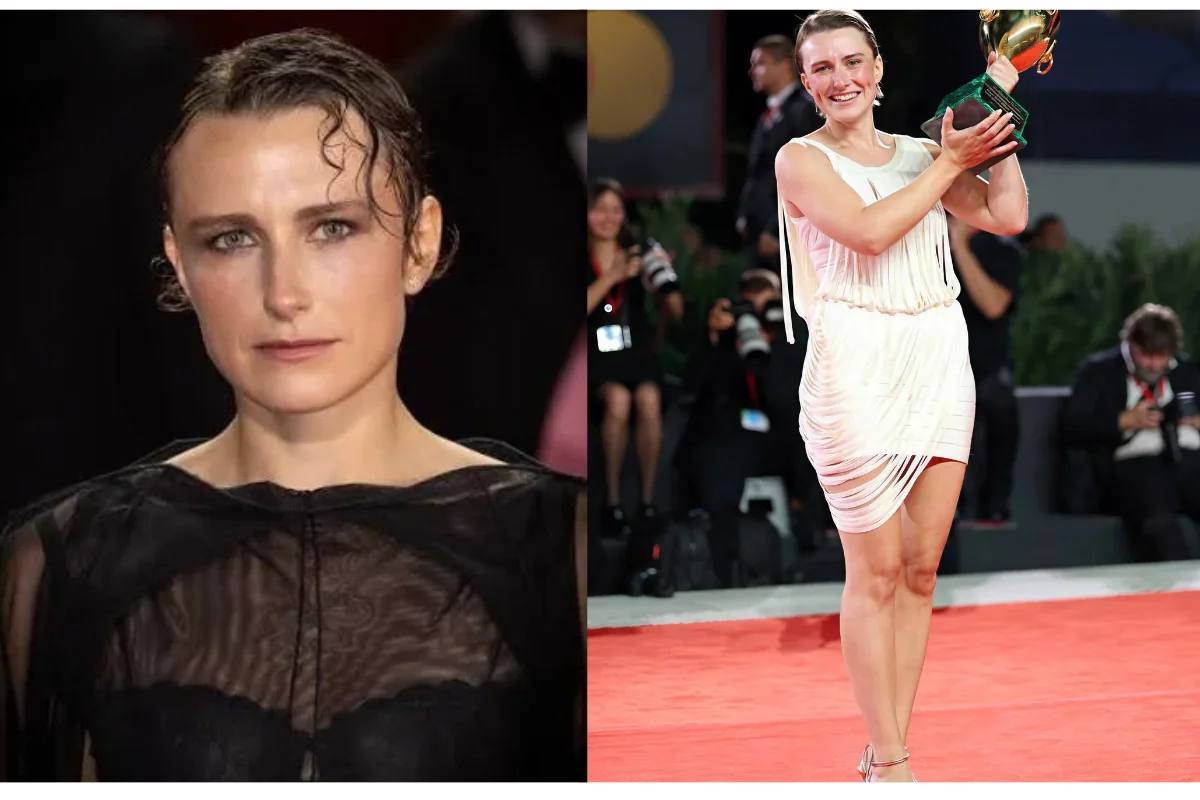
Mathilde Arcel would be the first to admit she did not see this coming. Two months ago she was a 30-year-old Danish actor with a career built mainly on stage and television, and only supporting parts to her name on a cinema screen. Then Woman Unknown, her first leading role in a feature, won the Golden Lion at Venice, and she left the Lido with the Volpi Cup for best actress. On Saturday, in Thessaloniki, she was named among the six nominees for European Actress at the 39th European Film Awards. In a conversation published this weekend, she is still catching up with her own year.
The detail that has followed her since September is almost too neat to be true, except that she has told it herself. Ahead of the Venice festival she had been collecting unemployment benefits in Denmark. She was on her way to report to a job centre in Copenhagen when she was told to turn around and fly back to the Lido for the awards ceremony. The film’s director, May el-Toukhy, had made a drama that was difficult to finance and emotionally draining to shoot. The lead, until that night, was not a household name even at home. She is now.
A first leading role, and a family memory of the war
In Woman Unknown, known in Danish as Kvinde Ukendt, Arcel plays Marie, a young housemaid whose intimate relationship with a German soldier during the occupation puts her future in danger. The film, a Denmark-Latvia-Sweden production, draws on the real history of women across Europe who, in peacetime, were publicly shamed for what they had done, or were said to have done, during Nazi occupation. El-Toukhy, accepting the Golden Lion, said what kept her going was “the urgent need to illuminate the unknown women of our common history, to make them known.”
For Arcel, that history was not abstract. She has described asking her Danish grandmother about the war and being told a child’s memory of liberation day: neighbours pulled into the street, spat at, called names, their hair cut off. “It really stuck with me, that this was her most vivid memory from the occupation.” Only when she began researching the part, she said, did she understand how widespread the punishment of those women had been, “all across Europe.”
There is a second family thread that makes the coming months feel strangely mapped. Arcel’s grandmother on another side comes from the Greek island of Lesvos. The European Film Awards will be held in Athens on 16 January. She has called that ceremony “a weird kind of homecoming.” “I feel so lucky,” she said, over coffee at Thessaloniki’s Mediterranean Palace, still slightly awestruck and willing to joke about the danger of a peak arriving so early. “It’s only downhill from here, right?”
The letter she sent, and the part she did not think she would get
In some ways she had been steering toward el-Toukhy for years. After graduating from drama school in Copenhagen, she has said, the director was “the first person I wrote to.” She wrote that she loved the films and would love to work together, without seriously expecting a reply. Then came a casting call. She still did not think the role would be hers. “I felt like the role had a different vibe to it than what I thought at that time was a natural fit for me.” It was a new kind of challenge, a long way from the parts she had been used to playing.
Once she had the job, the character still did not give herself up easily. “When I read it, I couldn’t get a read on Marie immediately. It was kind of like detective work.” She and el-Toukhy researched the period together: the music people heard, the films they watched, the kind of dreams that were available to a young woman in that place and time. “May is also very hands-on in the research. We both want to do everything we can to know as much as possible.”
Arcel has praised the director’s habit of writing women who are “complex in their morality,” a quality she also sees in el-Toukhy’s 2019 drama Queen of Hearts, in which Trine Dyrholm plays a successful lawyer undone by an affair. That moral complexity is the centre of Woman Unknown, and it is what the Venice jury responded to in Arcel’s performance, which has been called magnetic by critics who had no prior attachment to her name. A first leading role is a dangerous place to be astonishing. She was, and the industry has noticed.
Everything is open
The conversation in Thessaloniki took place as the festival was closing, with Woman Unknown on the final night’s programme, and as the European nominations were still sinking in. Arcel is now one of the official names in a category that also includes Penélope Cruz, Sandra Hüller, Léa Seydoux and Renate Reinsve. She is the newcomer on that list, which is both a compliment and a kind of pressure. Denmark has also chosen the film as its submission for best international feature at the 99th Academy Awards, so the coming months will be a campaign, not a pause.
Next she goes to the Marrakech Film Festival, where the film plays in the Horizons section. Scripts have started arriving. She now has American representation and has cleared her calendar for six months to consider what to do next. She is careful not to over-claim. “It’s very different, very exciting. It feels like being on the verge of something that might happen and might not even happen. A lot of dreams and hopes. Everything is open.”
European awards season is full of more familiar victory laps, including recent honours for established names such as Olivia Colman’s achievement award night in Stockholm. Arcel’s story is the opposite of that: not a mid-career coronation, but an arrival. She was unknown enough, in August, to be signing on at a job centre. She is known enough, in November, for the question people ask to have changed from “Who is she?” to “What will she do now?”
The honest answer, which she has already given, is that she does not know. That seems right. A profile written this early can only do so much. It can set down the facts: the first lead, the Lion and the Volpi Cup, the grandmother’s memory, the letter to a director, the EFA nomination, the Oscar submission, the cleared calendar. It cannot yet say whether this is the start of a long international career or a dazzling, finite moment. Arcel, for her part, is treating the uncertainty as the point. Everything, as she put it, is open. After the year she has just lived through, that is not a modest line. It is an accurate one.
About the Author