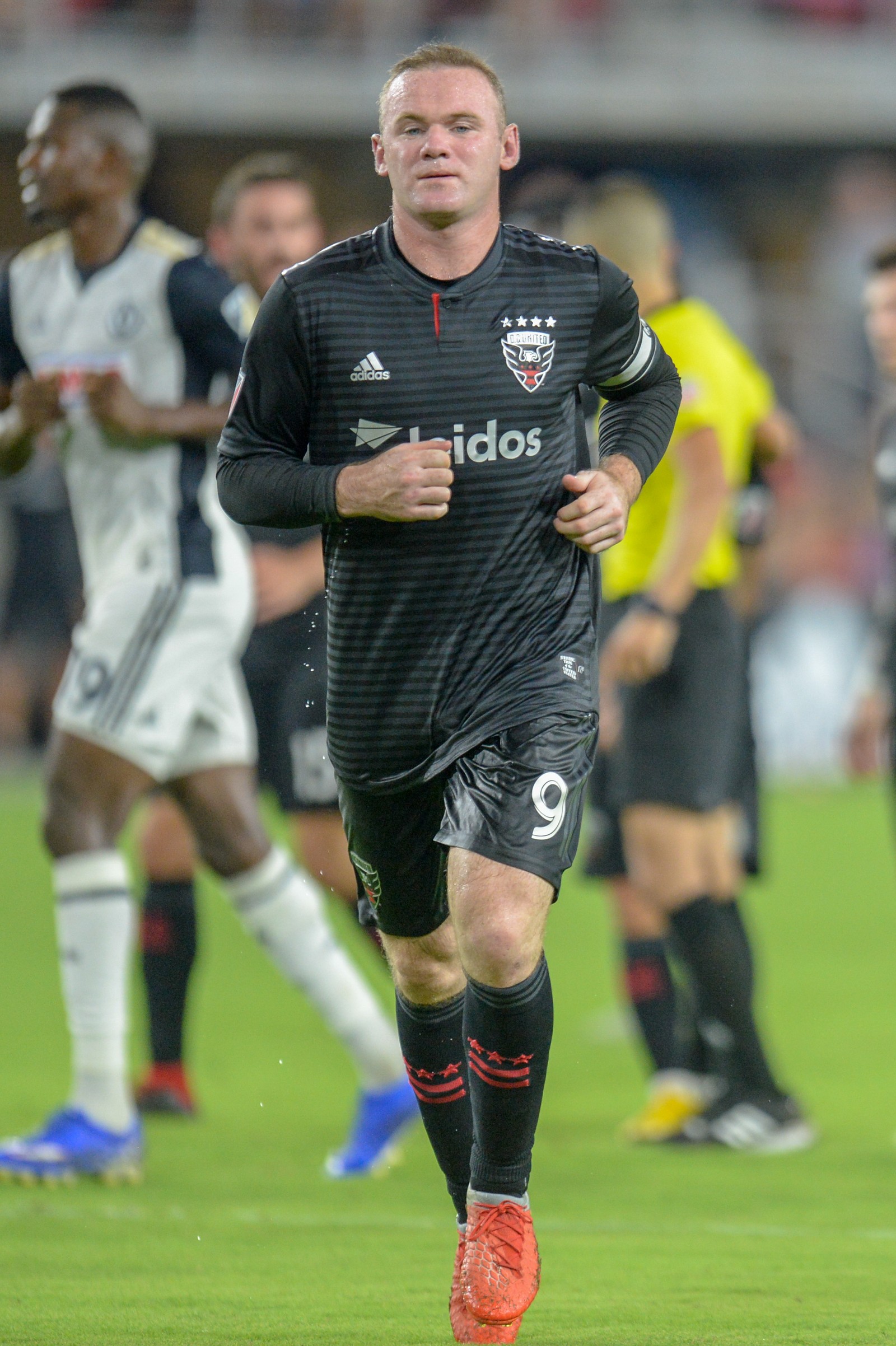
Photo: All-Pro Reels / Wikimedia Commons, CC BY-SA 2.0
Wayne Rooney is going into the jungle. ITV confirmed the official lineup for I’m A Celebrity… Get Me Out of Here! on the evening of Tuesday 10 November 2026, and the BBC, writing the following day, put his name at the front of the list. The former England captain will be among eleven campmates when the twenty-sixth series opens on Monday 16 November at 9pm on ITV1 and ITVX, hosted as usual by Ant and Dec and filmed in New South Wales.
It is a logical headline booking. Rooney remains one of the most recognisable footballers of his generation, a Manchester United record scorer and a former England captain whose career has been lived almost entirely in public. It is also a family sequel of sorts. His wife, Coleen, was runner-up on the show in 2024. “If you’re going in you want to win it,” he told the BBC. “Coleen’s already tried and obviously she finished second in the show so I’m here to bring that title back to the Rooney household.”
He has said, in the official ITV interviews released with the lineup, that he now finally has time to take part. After a playing career that ended in 2021 and a stretch of management jobs that have come and gone, the calendar has opened. The question for viewers is not whether they know his name. It is what kind of campmate a man with that history will be when the usual armour of stadiums, press conferences and punditry is taken away.
From Croxteth to Old Trafford
Wayne Mark Rooney was born on 24 October 1985 in Croxteth, Liverpool, and grew up supporting Everton, the club that signed him as a boy and gave him his first-team breakthrough as a teenager. He was still sixteen when he scored a last-minute winner against Arsenal in October 2002, ending the champions’ long unbeaten run and announcing himself as the outstanding English talent of his age. In 2004, at eighteen, he moved to Manchester United.
The years that followed made him one of the defining Premier League forwards of the 2000s and 2010s. He spent thirteen seasons at Old Trafford, scored 253 goals in all competitions — still the club’s record — and won five league titles, the Champions League, the Europa League, the FA Cup and multiple League Cups. He was a centre-forward who could also play deeper, a scorer and a supplier, and, later, the club’s captain under Louis van Gaal. In 2017 he returned briefly to Everton, then spent two seasons with D.C. United in Major League Soccer, before coming back to England with Derby County. He retired from playing in January 2021 when he was appointed Derby’s permanent manager.
For England he was just as central. He made his senior debut at seventeen, became the country’s youngest goalscorer, and finished with 53 goals in 120 appearances, a scoring record he held from 2015 until 2023 and a cap tally that still places him among the most-used outfield players England have ever had. He went to three World Cups and three European Championships, was named captain after the 2014 tournament, and retired from international football in 2017, returning only for a farewell appearance the following year.
That is the version of Rooney most of the audience already carries: the boy from Liverpool who became United’s record marksman and England’s leading man. It is also only half of the recent story. Management has been a harder chapter. He kept Derby in the Championship in his first season in full charge, then left in 2022 after the club’s financial collapse and relegation. He returned to D.C. United as head coach, later took over at Birmingham City, and in 2024 had a seven-month spell at Plymouth Argyle, the job ITV mentioned alongside Derby when it introduced him as a campmate. None of those roles ended as a long, settled success. By the time the jungle was offered, he had already become a Match of the Day pundit and, in his own words, finally had a gap in which to do the show.
Why this series, and what he says he fears
Rooney has been careful not to present the decision as a stunt. In the ITV interviews he said Coleen had offered him advice after her own series, but that he wanted to experience the camp “in my own way.” The competitive edge, though, is obvious in the BBC quotes. Second place already belongs to the household. He would like first.
Asked about his fears, he was specific. “Jumping out of a helicopter is a big fear,” he told ITV. “But I hope I do that, because then I will have conquered that fear.” He told the BBC he had been booked to jump from a plane three times before and had never made it onto the aircraft. Snakes he does not like. He thinks he is “ok with spiders,” while admitting they are “a lot bigger and scarier there.” He also said he would try everything if there is an eating trial, talking about “embracing everything.” Water is another unease: he told the BBC he does not like “what is in the water” and does not go in the sea.
Those answers do useful work for the programme. They give producers a map of trials and give viewers a way to watch him that is not only about fame. A man who spent two decades performing under floodlights is now talking about helicopters, snakes and the sea. Whether that nervousness is strategic or genuine will be for the first week of footage to suggest. On the page, at least, he has not pretended to be unshockable.
The camp he is walking into
ITV will run the series for three weeks. The official lineup around Rooney includes Joanna Page, Ricky Wilson, AJ Odudu, Chloe Burrows, Leomie Anderson, Mariella Frostrup, Claire Sweeney, Jack Skipper, YouTuber Sharky, and the Paralympian Ade Adepitan, who will be the first wheelchair user in the show’s history. Those names matter to the series, but they should not swallow a profile of one man. The point, for Rooney, is that he will be living with people outside the usual football dressing room, without a phone, in a format that rewards patience as much as status.
He is also walking into a show this site has already been tracking as it approaches launch, including the confirmed start date of Monday 16 November at 9pm on ITV1. The official confirmation of the campmates turns that date from a placeholder into an appointment. For a week the rumours had pointed in his direction. As of 10 November, the broadcaster has said it outright.
There is a temptation, with any sports star on a reality show, to treat the appearance as a fall from seriousness or as a payday. Reported fees have circulated in the entertainment press; they remain unverified claims, not figures released by ITV or by Rooney, and they are not the most interesting thing about the booking. More revealing is the sequence of a career: the teenage debut, the records at United, the England armband, the mixed years in the dugout, and now a camp in Australia where his wife has already been, and left a standard he has said he wants to beat.
If the jungle does what the format usually does, the public will see a reduced version of him: tired, wet, bored, occasionally sharp, and unable to manage the edit. That may be the appeal, for him as much as for the audience. For twenty years, Wayne Rooney was one of the most discussed men in British sport. Next week, the discussion moves to a campsite, a helicopter, and whether the former England captain can live up to a runner-up already waiting at home.
About the Author