Judi Dench
Adapted from an interview originally published by The Talks on 11 October 2017.
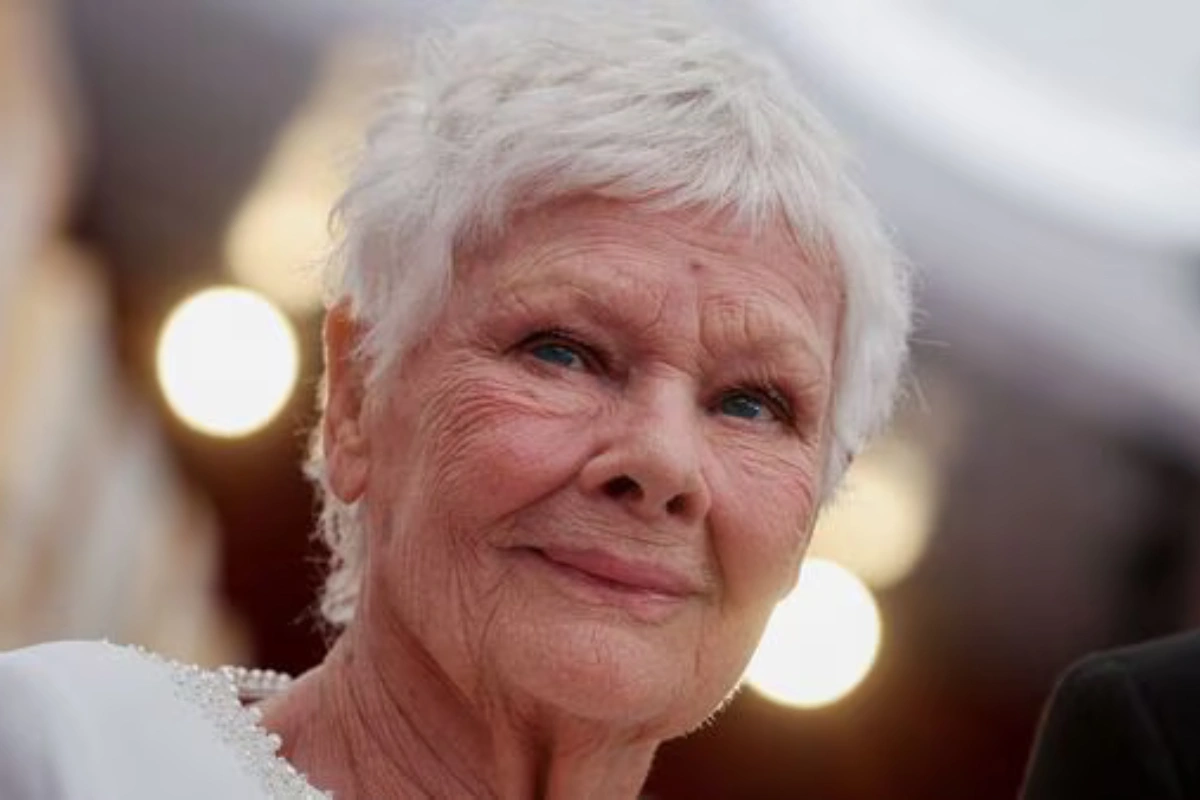
Dame Judi Dench has spent more than six decades on stage and screen, and she has a shelf of awards to show for it, including an Oscar for Shakespeare in Love. Generations of cinema-goers know her as M, the formidable head of MI6 in seven James Bond films. Theatre lovers know her as one of the finest Shakespearean actors Britain has produced.
Born in York on 9 December 1934, she was in her eighties when she sat down for this conversation, and she had recently spoken publicly about the condition that was taking her sight. Yet what comes through most strongly is not frailty but appetite: for learning, for laughing and for anything that keeps boredom away. Here is what she had to say.
An irrational fear of boredom
After so many years in film, have you ever become tired of acting?
Not really. Boredom is not something I do much, because I have an irrational fear of it. The only time I’m truly bored is when I’m on my own.
Why is being alone boring for you?
Because there’s nothing to do! And now that I’m losing my sight, I can’t read, and I can’t drive, and I loved driving. I used to race around in an old MG without ever taking a test until I was 50. (Laughs) I was a fiend behind the wheel. I can’t do it anymore, and that is very boring. But you learn to adjust.
There is nothing interesting about getting older. It’s horrible. Though somebody took a photo of me the other day with one of those apps that guesses your age, and it said I looked 20 years younger. Suddenly the day was absolutely glorious!
Honestly, you could pass for 60.
Sixty? That’s even better than the app! (Laughs) The app said 63, and I was delighted. But there’s nothing to be said for getting older at all.
Not even the wisdom or the spiritual exploration that comes with it?
We’re always trying to do that. We’re always trying to find out what other people believe in and what makes them tick. I get different ideas every day about the things I still want to do and explore.
“They say, poor old thing”
“When you’re in your eighties, people assume you belong in a box.”
Like skydiving?
Skydiving? Absolutely out. But there are lots of other things I’d like to try. The trouble is, once you’re in your eighties, people think, “Poor old thing, she’d rather be in a box!”
I used to paint a lot, but because of my eyes I stopped. Then David, my partner, said to me, “Why stop? It’s an interpretive art.” So I started again, because it doesn’t matter. I’m not doing it for anybody.
So the paintings won’t be shown anywhere?
Exactly. I’m not doing an exhibition. They’re only for me, to stash away or perhaps give as presents. My late husband, Michael, never painted because someone once told him, “You’ll never be a good painter.” What a terrible thing to say to someone! How dare anyone say “you’ll never”?
Did anyone ever tell you that you’d never make it as an actress?
No, but somebody once said, “You’ll never make a film.” That didn’t bother me, because I didn’t want to make films. I only wanted to be in the theatre. Shakespeare was my passion, and that’s what I did, so it didn’t matter.
I’ve also always wished I could write, but I feared I wouldn’t be good enough. But what is good enough? Who decides? We’re bound by these funny structures, and sometimes you have to break them. I think exploring that kind of natural curiosity is a healthy thing.
A new word every day
What are you curious about these days?
Everything. There are so many things I don’t know and want to find out. I try to learn something new every day. Today, for example, I learned the word anatidaephobia. You’ll never guess what it means: the irrational fear of being stared at by a duck. Don’t you forget it!
Like I said, I have an irrational fear of boredom. That’s why I now have a tattoo that says “Carpe Diem”. That’s what we should all live by.
Love, loss and laughter
“Laughing with someone, that’s everything.”
What made you so determined to seize the day?
I understood what love meant a long time ago, when I married my husband. It was so perfect, and then he got cancer. I never expected, not for a minute, that there would be anyone else in my life after he died. I’ve had many good friends, but it’s been very unexpected to have someone new who is as caring as David, someone to share things with. I feel very lucky. And laughing with somebody is terribly important. Laughing is the most important thing.
What do you laugh about?
Everything! We laugh about everything.
Even your eyesight?
Oh, yes. I laugh about the fact that I can’t see. A couple of weeks ago we went out to celebrate David’s grandson’s 14th birthday. I walked into the restaurant with my family, went up to a table and said, “Happy 14th birthday!” Then someone said, “Ma, that’s a couple sitting there!” We absolutely howled.
Sometimes that’s all you can do.
You have to! Everyone in my family was born like this. We all have a very extended sense of humour. I can find something funny in almost everything. I laugh a lot about politics, though not so much at the moment.
What acting still teaches her
Has acting helped you find the humour in life?
I think with everything you do, you can take something from it. You gain more understanding. You have a relationship with another person on a set, or with the director, and it’s not only taking but a lot of giving, exchanging views and having your ideas changed, and thinking, “I never thought about that before.” That kind of stimulus is healthy and exciting. I don’t think we should ever know it all.
Why her words still land
Read today, the conversation feels less like a celebrity interview and more like a set of quiet life lessons. Dench talks about losing the things she loves, from reading to driving, without self-pity. She talks about grief and unexpected new love with the same honesty. And she treats curiosity as something you choose every morning rather than something that fades with age.
There is a striking contrast between the grand roles she is famous for, queens, spymasters and Shakespearean heroines, and the person in this interview, who paints only for herself, gets a tattoo in her eighties and laughs at wishing strangers a happy birthday. It is that mix of gravitas and mischief that has made her one of Britain’s best-loved performers.
Her refusal to let anyone tell her “you’ll never” is perhaps the most useful takeaway. She did not care that someone said she would never make films, because she knew what she wanted. She went on to make dozens of them anyway. For another screen legend reflecting on age, risk and why artists should keep going, read our feature on Al Pacino’s thoughts on fame and failure.
Attribution: This feature is an edited adaptation for editorial purposes. The original interview was conducted by Rüdiger Sturm and published by The Talks on 11 October 2017.
About the Author