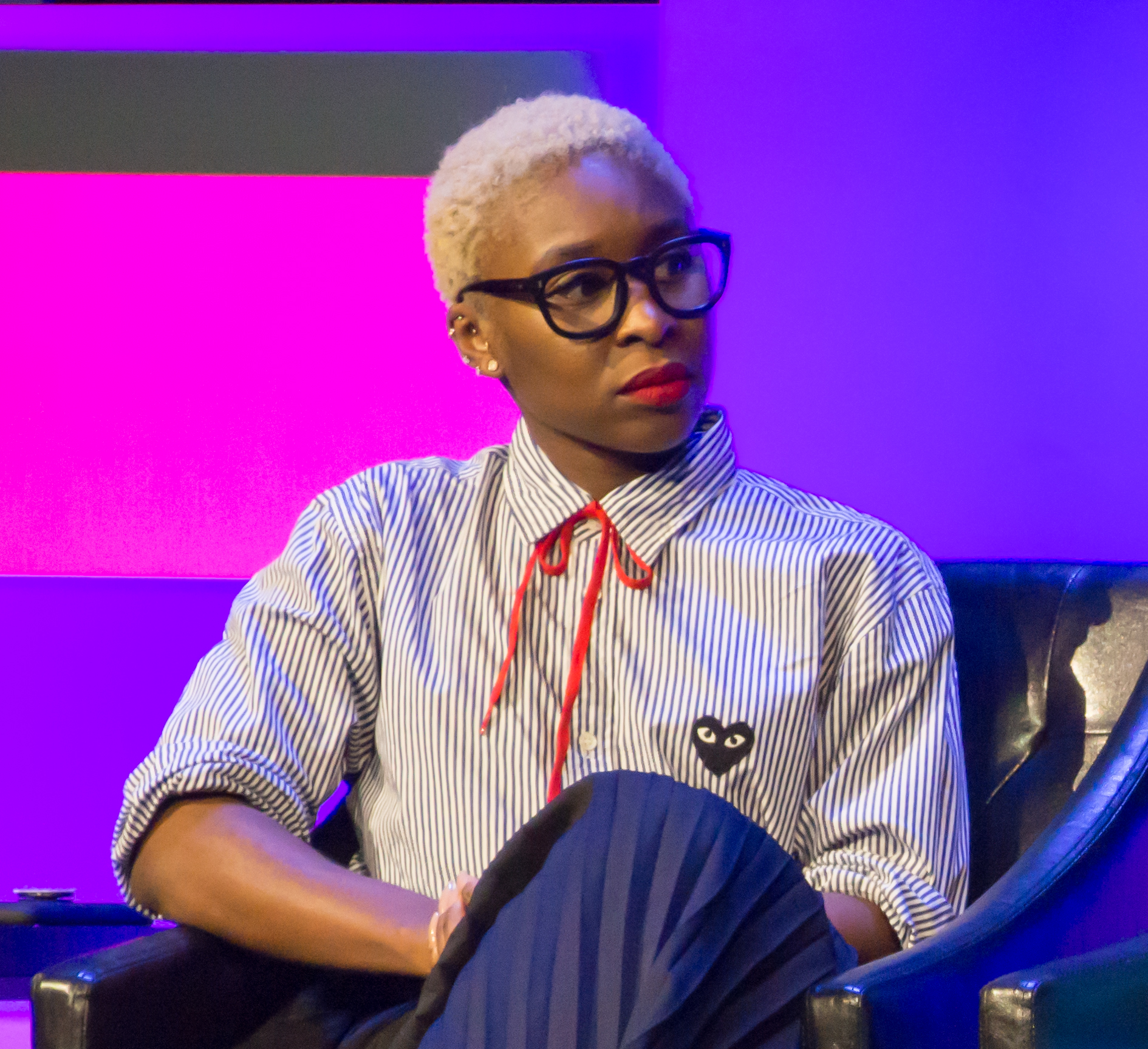
Photo: Rhododendrites / CC BY-SA 4.0 via Wikimedia Commons
Cynthia Erivo has spent much of the past two years as one half of the most-watched friendship in Hollywood. In a new interview with The Guardian, published on October 27, she talks about something far heavier: her new legal drama Prima Facie, the question of consent, and what the internet got wrong about her.
The conversation, with Guardian journalist Lanre Bakare, took place in a quiet corner of a west London restaurant. Erivo had just flown in after a concert in Phoenix, Arizona, the night before. Before that, the paper notes, she had sat front row at Dior during Paris fashion week and had been announced as a guest host on SNL UK.
Making Tessa her own
Prima Facie is adapted by Suzie Miller from her one-woman play, the stage hit that Jodie Comer starred in. The film is directed by Susanna White and had its world premiere at the Toronto International Film Festival on September 13. It reaches UK cinemas on November 13, and Australian cinemas on January 14.
Erivo plays Tessa, a barrister who has risen from a working-class background and who is skilled at defending men accused of sexual assault. When she is raped by a colleague, her world falls apart, and she experiences the justice system from the other side.
Asked whether she hesitated to take on a role so closely tied to another actor, Erivo was direct. “I get asked that question a lot,” she told The Guardian. She and Comer did meet at a fashion dinner and talked about the part, “not asking any tips or anything,” she said. “I’m never worried about what someone else has done. I try to be respectful.”
“It’s very clear what consent is”
The interview’s most striking passage is about consent, which Erivo believes people make more complicated than it needs to be.
“I think we’re very wishy-washy when it comes to what consent is, when we shouldn’t be,” she said. “It’s very clear what consent is: if a person isn’t conscious, or conscious enough to say yes, they’re not saying yes. If a person doesn’t say yes, they don’t say yes. If the body language doesn’t say yes, they don’t say yes.”
She hopes the film can start that conversation in more than one place. “We have had judges see it, we’ve had lawyers see it, [but] one of the major issues is the way we view consent,” she said. “I hope that as this film filters out, we start to have a conversation not just among us as people, but within law.”
On Tessa’s journey, Erivo said the character only understands how hard it is for victims to recall trauma in detail once she is living it. “I think it’s only then she realises what she’s been asking other people to do – when it comes to recall – is actually impossible.”
Three jobs at Rada
Bakare draws a line between Tessa’s rise and Erivo’s own path from south London through the Royal Academy of Dramatic Art. Asked what navigating Rada was like, Erivo gave a one-word answer: “Hard.”
She told the paper she held down three jobs while studying and was often exhausted in class. “I’m falling asleep in class, so people were like: ‘She doesn’t care,'” she recalled.
One story stands out. Erivo said she was offered a two-week job as a backing singer for Westlife that would have paid £10,000, enough to cover a couple of years of fees. When she asked for the time off, she said the answer was: “If you go, you leave. If you stay, you stay.”
Erivo has been vice-president of Rada since 2024, and she says she wants things to change. “I want it to be different,” she said. “Rada is not an easy place to go to school. It asks a lot of you.”
On the casting debate
The Guardian also returned to the backlash Erivo faced when she was cast as Harriet Tubman, with some critics arguing that roles of African American icons should go to African American actors. Almost a decade on, she thinks the argument is still going on.
“I still think it’s happening,” she said. “And I think it’s a waste of everyone’s time.” Asked whether she sympathises with the view that African Americans face greater inbuilt disadvantages, she said: “I have empathy. But I also think that it’s hard for a Black English kid from London to also make it.”
Wicked, Ariana Grande and the “bodyguard” label
The section fans will likely share most is about the Wicked: For Good press tour, when clips of Erivo and Ariana Grande holding hands, crying and “holding space” for each other spread across social media.
Erivo said she has seen most of the gifs and loves many of them. What bothered her was the suspicion that followed. “There was this weird sort of, what’s the word I’m looking for … annoyance … at the fact that two women could actually be friends,” she said. “Why are they showing emotion? How dare they cry? And how dare they laugh?”
She also spoke about the moment in Singapore when a man ran onto the red carpet and grabbed Grande. Erivo stepped in and put her arm around her co-star. “No one else was moving. We were on a carpet. We were exposed,” she said. “My immediate response was: ‘Get this man away from us now.'”
Being recast online as Grande’s “bodyguard” still stings. Erivo told The Guardian the reaction was rooted in misogyny and misogynoir. She recalled a journalist asking whether she was a “protector,” and her thought at the time: “Oh, you think because I look like this that you could talk to me this way about something that was a human thing that I would have done for any friend.”
“I think that this particular moment went just too far,” she said.
Discipline, and a weakness for crisps
The interview also offers a glimpse of the routine behind her schedule. According to the paper, Erivo does not drink alcohol, is vegan, skips airline food in favour of her own prepacked meals and uses an infra-red sauna. Earlier this year, she ran the London Marathon and went straight into performing Dracula on stage, playing all 23 parts.
She does have one vice: Ruffles crisps. “When you get a good batch, and the salt-to-potato ratio is perfect … it’s amazing,” she said.
Still pushing limits
Asked whether the online abuse made her rethink her career, Erivo said she still wants to keep testing herself.
“What else have I not discovered about myself as a person, as an artist, as a friend?” she said. “In order to push a limit, it’s gonna hurt a little bit. It’s gonna feel uncomfortable, which means I’m never staying the same. I’m always having to build.”
Fans who want her lighter side will remember her viral “Nigerian Wicked” sketch on SNL UK, proof she can switch registers fast.
For now, the focus is on Prima Facie and its UK release next month, and on the conversation Erivo hopes it starts.
Featured image: Rhododendrites / CC BY-SA 4.0 via Wikimedia Commons
Related reading
- Cynthia Erivo’s ‘Nigerian Wicked’ Sketch Goes Viral on SNL UK
- The Toadies Interview: Mark Reznicek on The Charmer, Steve Albini & Vinyl
- Madonna Exclusive Interview 2026 | Music, Creativity & Reinvention
About the Author