
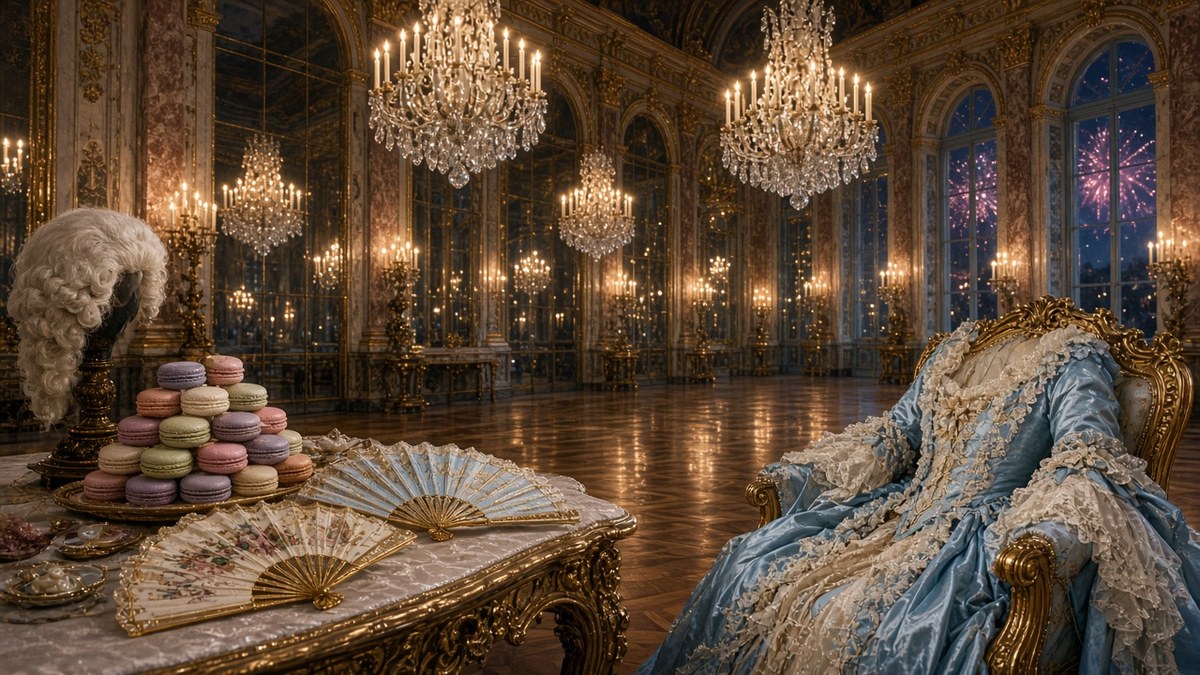
Long before Cannes and the Met steps, Europe’s most exclusive guest list lived in one palace. Versailles court glamour set the rules for luxury, fashion and the art of the grand entrance, and its candlelit nights still shape how the world celebrates. Welcome to Flash Back Files, the Eurocelebs column that rewinds to Europe’s legends, and our first reel spins through seven golden nights at the palace of the Sun King.
1. The Pleasures of the Enchanted Island, 1664
In May 1664, the young Louis XIV staged a festival called Les Plaisirs de l’Île enchantée for some six hundred guests. Over several days there were knights in costume, ballets, banquets by torchlight and a premiere by Molière with music by Jean-Baptiste Lully. It was a royal launch party for a palace that was still mostly hunting lodge, and it announced to Europe that Versailles was the place to be.
2. The Court Moves In, 1682
On May 6, 1682, Louis XIV officially moved his court and government to Versailles. Nobles followed, because being seen at the palace became the key to power and favour. Every day had choreography, from the king’s rising ceremony to evening gatherings called appartements, with music, cards and billiards.
3. The Hall of Mirrors Shines, 1684
Completed in 1684, the Hall of Mirrors stretched 73 metres with 357 mirrors facing seventeen tall windows over the gardens. At night, thousands of candles in silver and crystal turned it into a corridor of light. It remains one of the most photographed rooms in Europe.
4. The Yew Tree Ball, 1745
In February 1745, Louis XV threw a masked ball for his son’s wedding where the king and his friends came disguised as clipped yew trees. Tradition says that night he grew close to Jeanne Antoinette Poisson, soon to be the Marquise de Pompadour, a great patron of art, porcelain and philosophy.
5. Versailles Court Glamour Peaks: The Royal Opera, 1770
In May 1770 the Royal Opera of Versailles opened its doors for the wedding celebrations of the future Louis XVI and Marie Antoinette. Designed by Ange-Jacques Gabriel, it was a jewel box of gilded and painted wood, built so the floor could rise to stage level and turn the theatre into a ballroom overnight. Restored in 2009, it still hosts opera and ballet today.
6. The Queen’s Trianon and Hamlet, 1774 to 1785
Louis XVI gave Marie Antoinette the Petit Trianon in 1774, and she created her own world around it, including the Queen’s Hamlet, a storybook village of thatched cottages. With designer Rose Bertin she made fashion into news, from pastel silks to towering hairstyles. The famous line about cake, by the way, appears in Rousseau’s Confessions, written before she was queen.
7. Sofia Coppola’s Marie Antoinette, 2006
More than two centuries later, director Sofia Coppola filmed Marie Antoinette inside the palace itself, pairing pastel macarons and Manolo Blahnik shoes with a pop soundtrack. The film introduced Versailles court glamour to a new generation and made the palace a fashion mood board again.
The Future Angle: Versailles in 2076
Picture a Versailles night fifty years ahead: fireworks drawn by drones over the Grand Canal, a Hall of Mirrors that reflects holograms of the 1664 knights, and guests arriving by electric barge. Glamour changes its tools, never its appetite. For today’s European nights out, see our Riviera After Dark guide, and for crown jewels in the spotlight read the haute joaillerie crown story.
Visit the future: send us your idea
How would you throw a Versailles night in 2076: drones for fireworks, a hologram Hall of Mirrors, a court on the Riviera? Send Flash Back Files your idea. Send us your idea.
FAQ
When did Louis XIV move the court to Versailles?
Louis XIV officially moved his court and government to Versailles on May 6, 1682. The palace became the centre of French political and social life, and nobles competed to live there because being seen at court was the surest path to royal favour, titles and influence.
What was the Yew Tree Ball?
The Yew Tree Ball was a masked ball held at Versailles in February 1745 to celebrate the wedding of Louis XV’s son. The king and his companions arrived disguised as clipped yew trees. Tradition links the night to the rise of the Marquise de Pompadour, a celebrated patron of the arts.
Did Marie Antoinette say let them eat cake?
There is no reliable evidence that she said it. A similar line appears in Jean-Jacques Rousseau’s Confessions, written before she ever arrived in France and attributed there to an unnamed great princess. Historians generally treat the quotation as a later legend attached to the queen.
Keep reading
- 6 European Screen Legends Who Defined Glamour, From Greta Garbo to Sophia Loren, in 2026
- 7 Royal Fairy Tale Treasures, From the Cullinan Diamond to Neuschwanstein, in 2026
- Crowning Glory: The Royal Wedding Tiaras of Queen Elizabeth, Diana, Kate and Meghan, and the Stories Behind Them
Sources named in text: Palace of Versailles; Jean-Jacques Rousseau, Confessions; Molière and Lully archives; Sofia Coppola, Marie Antoinette (2006).
About the Author

1 thought on “7 Golden Nights That Defined Versailles Court Glamour, Revisited in 2026”