
UFO Movies
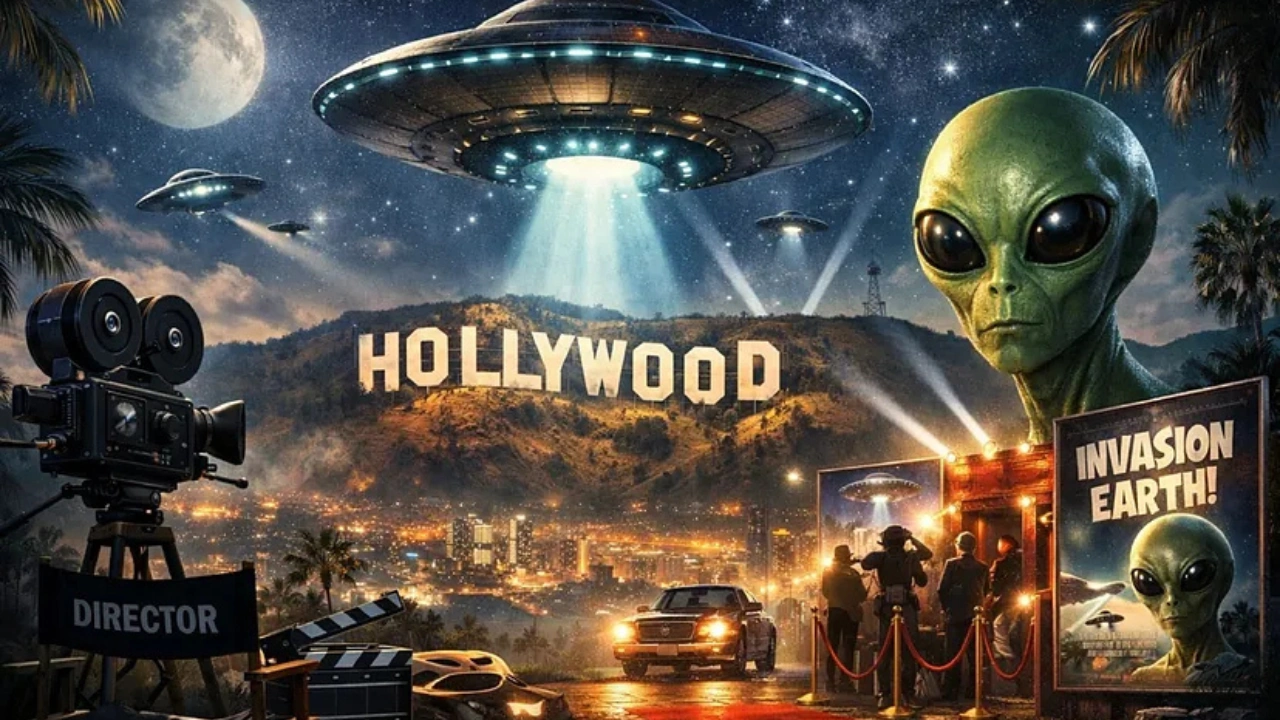
Hollywood’s fascination with UFOs and alien life is returning in a big way in 2026, but this time the tone is far more serious and reflective than the explosions and invasions of decades past.
For years, mainstream films often portrayed aliens as destructive invaders or terrifying monsters. Movies such as Independence Day and War of the Worlds leaned heavily on invasion stories that framed extraterrestrials as a threat to humanity. Now filmmakers seem to be moving towards more thoughtful storytelling that explores the scientific, social and philosophical implications of contact.
Real-world events fuel new interest
Part of the renewed interest comes from developments far outside Hollywood. Over the past decade, the topic of what the US government now calls unidentified anomalous phenomena, or UAP, has moved from the fringes to the mainstream.
In 2017, reports revealed that the Pentagon had run a secret programme to study unexplained sightings. In 2020, the US Navy officially released videos recorded by its pilots showing objects they could not identify. The Department of Defense later set up a dedicated office to investigate such reports, and Congress has held public hearings on the subject.
The most dramatic of those came in July 2023, when former intelligence officer David Grusch told a House committee under oath that he had been informed of a long-running government programme to recover and study craft of non-human origin. His claims remain unproven and have been disputed by officials, but they made headlines around the world.
The conversation gained further momentum on 19 February 2026, when President Donald Trump directed government agencies to identify, declassify and release files related to UFOs, UAP and possible extraterrestrial life. The Pentagon has since begun publishing material in a series of releases. Together, these developments have made the subject feel less like science fiction and more like a legitimate cultural and scientific debate.
Spielberg returns with Disclosure Day
Two major Hollywood projects show how the mood is changing. The first is Disclosure Day, Steven Spielberg’s return to the genre that helped make his name. Released by Universal Pictures on 12 June 2026 and written by David Koepp, the film explores the global reaction to the confirmed existence of alien life.
The cast is led by Emily Blunt and Josh O’Connor, with Colin Firth, Eve Hewson and Colman Domingo in supporting roles. The story echoes themes from Spielberg’s classics Close Encounters of the Third Kind and E.T. the Extra-Terrestrial, focusing on wonder, fear and humanity’s response to learning that we are not alone.
Koepp and Spielberg have a long history together, from Jurassic Park to War of the Worlds. That last film was one of the darker invasion stories of the 2000s, so Disclosure Day represents an interesting return for both men to the more hopeful, curious tone of Spielberg’s earlier work.
Spielberg’s long relationship with the skies
Few directors are as closely tied to aliens on screen as Spielberg. Close Encounters of the Third Kind in 1977 imagined first contact as a moment of awe, ending with music rather than warfare. Five years later, E.T. the Extra-Terrestrial turned a stranded visitor into one of cinema’s most loved characters and became the highest-grossing film of its time.
He has returned to the subject again and again since. He produced the television miniseries Taken, which followed several families across decades of alien encounters, and backed J.J. Abrams’s Super 8, a deliberate homage to his own early films. With War of the Worlds in 2005, he showed the darker side. Disclosure Day brings that long journey into a world where governments are openly talking about unexplained sightings.
Kosinski’s “science fact” thriller
The second project is an untitled UFO thriller from director Joseph Kosinski, best known for Top Gun: Maverick and F1. Apple confirmed in March 2025 that it had acquired the film, which is produced by Jerry Bruckheimer and written by Oscar nominee Zach Baylin.
The film will explore disclosure around UAP, and it has a striking real-world connection: David Grusch is attached as a consultant and associate producer. Kosinski has described the project as “science fact rather than science fiction”, focusing on government insiders investigating secret programmes linked to recovered craft. It has been compared to the investigative tone of All the President’s Men.
That approach is very different from a traditional alien movie. Rather than spaceships over cities, the drama is expected to come from documents, whistleblowers and the question of who knew what, and when.
A return to intelligent alien storytelling
This new wave signals a move away from the “aliens as villains” trend that dominated many films from the 1990s to the early 2010s, including Signs and Mars Attacks!. Instead, Hollywood appears to be rediscovering an older tradition of films that approached first contact with curiosity, philosophy or social commentary.
Classic examples include:
- The Abyss by James Cameron, which portrayed peaceful underwater aliens during a global crisis.
- Contact, directed by Robert Zemeckis and starring Jodie Foster, which explored communication with an advanced civilisation through science and philosophy.
- The Iron Giant, a Cold War allegory about friendship and fear of the unknown.
- The Man Who Fell to Earth, starring David Bowie as an alien visitor struggling with humanity’s darker impulses.
- Arrival by Denis Villeneuve, which focused on language, empathy and the perception of time.
- District 9 by Neill Blomkamp, which used aliens as a metaphor for social injustice and discrimination.
Why audiences are ready
There are good reasons why this kind of story might connect with audiences now. People are surrounded by conflicting information and growing distrust of institutions, and stories about governments hiding the truth tap directly into that mood. At the same time, the idea of contact with another intelligence invites big questions about who we are and what we value, the kind of questions that serious science fiction has always asked.
Villeneuve’s Arrival showed that a quiet, thoughtful alien film could be both a critical and commercial success. Its influence can be felt in the new projects, which put people and ideas at the centre rather than spectacle. Villeneuve himself has since moved on to another huge franchise, and you can read about the casting race for his next film in our report on Jacob Elordi emerging as a contender for James Bond.
A deeper lens
As public interest in unexplained aerial phenomena continues to grow, Hollywood appears ready to revisit extraterrestrial stories with a deeper and more thoughtful lens, blending science, politics and philosophy rather than relying on simple invasion plots. Whether the truth is out there or not, the stories we tell about it are clearly changing.
About the Author