The FKA twigs Josephine Baker biopic is being finished in Europe this week, and it is built on a scale French cinema does not attempt every year. In an exclusive set visit published by Variety on 11 November, Elsa Keslassy found the British singer and dancer already in character at dawn in the Bois de Vincennes, opposite Oscar-nominated Aunjanue Ellis-Taylor as Baker’s mother. Director Maïmouna Doucouré and Studiocanal are shooting entirely in France and in Sofia, Bulgaria. The cameras wrap this week.
The production has enlisted some 2,400 extras. Costume shops made the hats, the shoes, even the buttons, rather than renting the wardrobe. Sixteen companies, producer Zangro said, had already tried and failed to get a Baker film made. This one is going through, and it is going through on this side of the Atlantic.
Inside the FKA twigs Josephine Baker biopic — and why Europe is standing in for America
Doucouré, the Sundance-winning filmmaker of Cuties and Hawa, has anchored the story in Baker’s return to the United States in 1951, when the performer who had found fame and freedom in France confronted the segregation she had left decades earlier. The film moves from that chapter into flashbacks: a St. Louis childhood, 1920s Paris and the Folies Bergère, work with the French Resistance, and later years. Doucouré has said she does not want only the Panthéon icon. She wants the wounds, the flaws, and the resilience underneath.
FKA twigs was among the first people Doucouré saw, on the London leg of a search that also went to New York and Los Angeles. Every audition, famous or not, had to include singing, dancing and a demanding dramatic scene. When twigs performed, Doucouré has said she started crying and forgot she had written the scene. She kept auditioning anyway, then could not shake the impression. The role asks twigs to play Baker across decades, to sing, to dance, to work in American accents, and to speak French, a language she did not previously know.
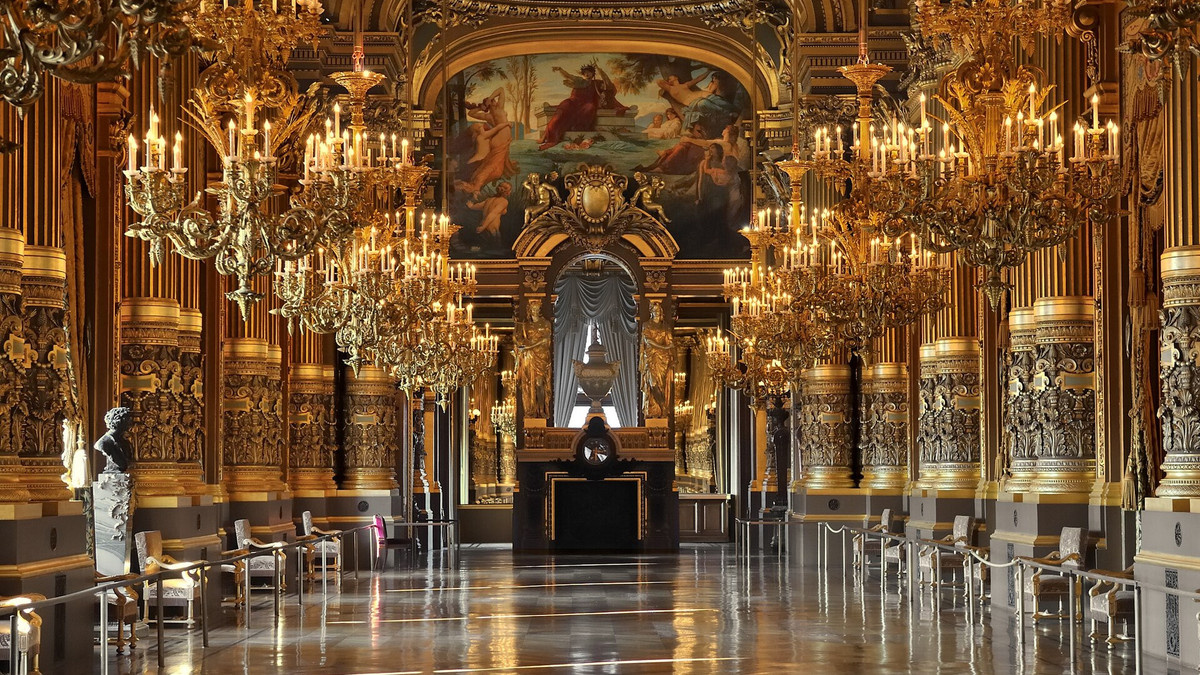
The Folies Bergère recreations are the lavish end of the shoot. The intimate end, on the October afternoon Variety described, was a cemetery confrontation in a cream pinstriped coat, a beret and black leather gloves, after a 4am hair-and-makeup call. Between takes, twigs stayed in character. The set switched between English and French.
Here is the production fact that should stop a European desk mid-scroll. Although much of the story is set in America, the film is not shooting there. “The United States has become too expensive for filming,” Zangro told Variety. “So we’re doing what the Americans themselves are doing. We’re going to Sofia, Bulgaria, where there are backlots where we can recreate Harlem and Broadway.” A parking lot in Saint-Denis has been turned into 1918 St. Louis. Production designer Stéphane Rosenbaum has had to invent 1950s Miami hotel suites with LED exteriors. That is the same runaway-production argument Hollywood is having at the American Film Market this week, only told from the European side that is catching the work.
A ten-year Canal+ ghost, Baker’s sons, and a banana skirt made from scratch
Studiocanal is co-producing with Bien ou Bien Productions, Doucouré and Zangro’s banner, financing the film and handling international sales. Zangro said the project had been circulating at Canal+ for more than ten years, and that Baker herself had tried to develop a film about her life as far back as 1968. Development took four years. The screenplay is by Doucouré and Olivier Lorelle. The production has the blessing of Baker’s sons Jean-Claude Bouillon Baker and Brian Bouillon Baker, and of the Rainbow Tribe of children she adopted. “Who better to tell me about Josephine Baker than her own children?” Doucouré said, noting that the books sometimes contradict one another.
Costume designer Emmanuelle Youchnovski, whose credits include The Substance and Dalida, made the wardrobe from scratch, tapping artisans who work with Chanel for buttons and ornaments, embroidery workshops in India, and Faubourg 22-11, an atelier associated with Schiaparelli that worked on the yellow coat in The Substance. The banana skirt had to be cut for twigs’ athletic dancer’s body. Doucouré has been explicit that the costume cannot be separated from the colonial stereotypes of its moment, and equally explicit that Baker’s power was in how she played inside those constraints. The house-level craft is the kind of European scarcity Everyday Vitality by Richiegaps sits beside: not a mass drop, a made thing.
The cast also includes Giuseppe Maggio, Grégory Montel, Benjamin Millepied, Féodor Atkine, Alex Lutz and Harmony Raine Riley. Studiocanal will distribute in its own territories, including France, the United Kingdom, Germany, Italy, Benelux, Poland, Australia and New Zealand, and is selling the film worldwide. Zangro’s line is the positioning: “It’s not a French film made for the international market. It’s an international film in every respect.” No release date was published in Variety’s set visit. We will not invent one.
The European window, if you book or attach to this name
A lead who can sing, dance and act in two languages, on a Baker-scale European shoot, is a booking and attachment event once the film leaves the stage. We will not invent a fee for FKA twigs, or for anyone in this company. If you are pricing European musical or film talent for 2027 rooms, start at Book a Celebrity and the Celebrity Fee Meter.
The wider European theatrical machine is already on a heater, as we set out in Spain and France film industry insights for 2026. For the global context, see Hollywood’s Top 10 Movies of 2026. The stamina required to hold a role this large, in two countries, in a language learned for the job, is the territory Motivations Masters describes in Orientation, Nothing is 100%. Brands that want to stand next to this European film audience can start at Advertise with EuroCelebs. The Folies lights will go out this week. The film is the thing that remains.
About the Author