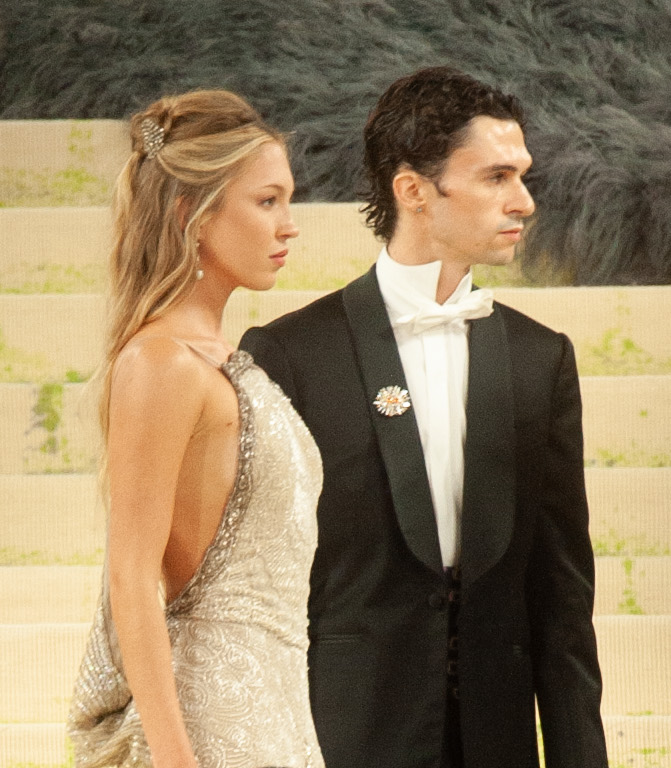
Lila Moss and Conner Ives at the 2026 Met Gala. Photo: SWinxy via Wikimedia Commons, CC BY 4.0.
Female creators in Europe do not wait for permission. They treat fashion, art, music and the feed as one stage, and they walk onto it as if the continent itself had trained them for the part. That is not a mood. It is the product of cultural freedom, of cities that have spent a century rewarding self-expression, and of a creator economy large enough to turn bold taste into a business.
Why Female Creators in Europe Are the Boldest
The nerve is older than Instagram. BBC Culture has described how interwar Berlin, with its fashion industry and modern print media, became particularly fertile ground for female photographers, part of a wider New Woman moment in early twentieth-century Europe. Paris made couture a language. Milan made design a profession. London mixed art school, street style and pop. Madrid, after the Movida, kept a taste for fearless performance. Berlin’s clubs and ateliers still treat experiment as a civic habit.
Those cities went online without losing the habit. Paris-based creator Samia Kanaan told Numéro Netherlands that the city gave her independence, and that “when you feel free, you dare more.” Kristen Manu told Roe Magazine that Paris creates a strong sense of freedom because people there tend to judge each other less. Designer Lou de Bètoly, in a Berlin Fashion Week feature, said the city lets her blur fashion, art, music and performance, without commercial pressure to follow trends. The European advantage is room to be specific, and a public that already knows how to read a look.
Fashion and Art Capitals: Paris, Milan, Berlin, London, Madrid
Paris still teaches the world how glamour is cut. Jeanne Damas founded her label Rouje in 2016. Model, music producer and author Caroline de Maigret helped export that attitude in How to Be Parisian Wherever You Are, published in 2014. German creator Leonie Hanne has turned unapologetic glamour into a global front-row practice. Vogue Scandinavia, in a July 2025 digital cover, put her following at 4.8 million and described her in constant contact with houses such as Schiaparelli and Elie Saab.
Milan is where a personal style becomes a company. Chiara Ferragni launched The Blonde Salad in 2009, founded Chiara Ferragni Brand in 2013, and was named the most powerful fashion influencer in the world by Forbes in 2017. Harvard Business School published a case study on The Blonde Salad in 2015. Her official platform put her Instagram following at around 28.7 million as of 2025. A point of view, held long enough, can become inventory, a label and a boardroom.
Berlin rewards the look that would be too much anywhere else. Maria Roi, from Kyiv and working in the city, has built 1.6 million TikTok followers with self-made, densely styled films that blend cabaret, burlesque, steampunk and traditional Ukrainian dress, The Berliner reported in March 2026. Some of her videos have exceeded 15 million views. It is a full costume change in public, and the platform said yes.
London holds the art and the pop at once. Danielle Brathwaite-Shirley, who works between Berlin and London, opened The Delusion at Serpentine North on 30 September 2025, a show that ran to 18 January 2026 and followed commissions at Berghain and at London’s Piccadilly Circus, as Artsy and the Serpentine Galleries documented. British model Adwoa Aboah founded Gurls Talk in 2015 as a space for young women, a project later covered by the BBC. Charli XCX’s Brat, released in 2024, turned a lime-green club attitude into a global style code, as British Vogue reported. And how Dua Lipa built her persona remains the model for a British-Albanian star who travels worldwide without going soft.
Madrid sends the signal south, then worldwide. Rosalía’s Motomami era, launched with the 2022 album of the same name, made leather, red, flamenco memory and sharp silhouettes into a new Spanish pop image, a look Harper’s Bazaar has traced across her stage wardrobe. Our dispatch on the Rosalía LOS40 Awards night in Barcelona caught that same high-fashion music stage in motion.
The Creator Economy and Platform Reach
The feed has made these capitals simultaneous. A Berlin film, a Milan shoe, a Paris dress and a London hook can land in the same hour, and female creators in Europe know how to dress that speed. Lila Moss’s playful Pucci holiday campaign showed that a young English model can carry a European maison with glamour and comic timing. The wider commercial shift is already on the ledgers in our report on why females are the new celebs.
Influencity’s 2026 study of Instagram influencer marketing in Europe found that, among creator profiles classified as female or male, 59.8 percent were female. A study by Coherent Market Insights for Paris Creator Week, cited by BNP Paribas in February 2026, valued the European creator economy at $32.8 billion in 2025, or €28 billion, and projected nearly $157.3 billion, or €135 billion, by 2032, an average annual growth rate of 25.1 percent. In France the same research put the sector at nearly $8.1 billion in 2025, up 20 percent on the previous year.
The Business Behind Boldness
Boldness here is not a stunt. It is a commercial method. Sponsorships, labels, beauty lines, tours and campaign contracts follow a face that people already trust to take a risk. Limited Editions Europe has set out why women in luxury ads attract customers, from Chanel to Dior. Female creators in Europe now bring their own rooms with them: audiences, archives, product lines and a style that can be booked.
The operators who last turn a look into a house, a tour or a campaign book. Kolsquare’s Voices of the Creator Economy 2025 survey, conducted with NewtonX among 783 professional creators across six European markets, found that 38 percent of women earned under €500 a month from content, compared with 23 percent of men, while only 20 percent of women earned more than €3,000 a month, against 32 percent of men. Ferragni’s label, Damas’s Rouje, Aboah’s Gurls Talk, Hanne’s couture partnerships, Rosalía’s stage image and Dua Lipa’s persona all make the boldness ownable.
That is why female creators in Europe feel like the centre of the story. They inherited cities that treat self-expression as culture, not as a crisis, and stages that already know how to amplify a point of view. They now have platforms large enough to carry a Berlin experiment, a Milan brand and a Madrid hook to the same global audience. The result is not a trend. It is a standard.
FAQ
Why are female creators in Europe seen as the boldest?
They work in cities with a long tradition of cultural freedom and self-expression, and they have turned that nerve into visible careers in fashion, art, music and the creator economy.
Which cities shape the scene for female creators in Europe?
Paris, Milan, Berlin, London and Madrid remain the core fashion and art capitals, each with a distinct register of style, experiment and brand-building.
How large is the European creator economy?
A Coherent Market Insights study for Paris Creator Week, cited by BNP Paribas in February 2026, valued the European creator economy at $32.8 billion in 2025 and projected nearly $157.3 billion, or €135 billion, by 2032.
About the Author