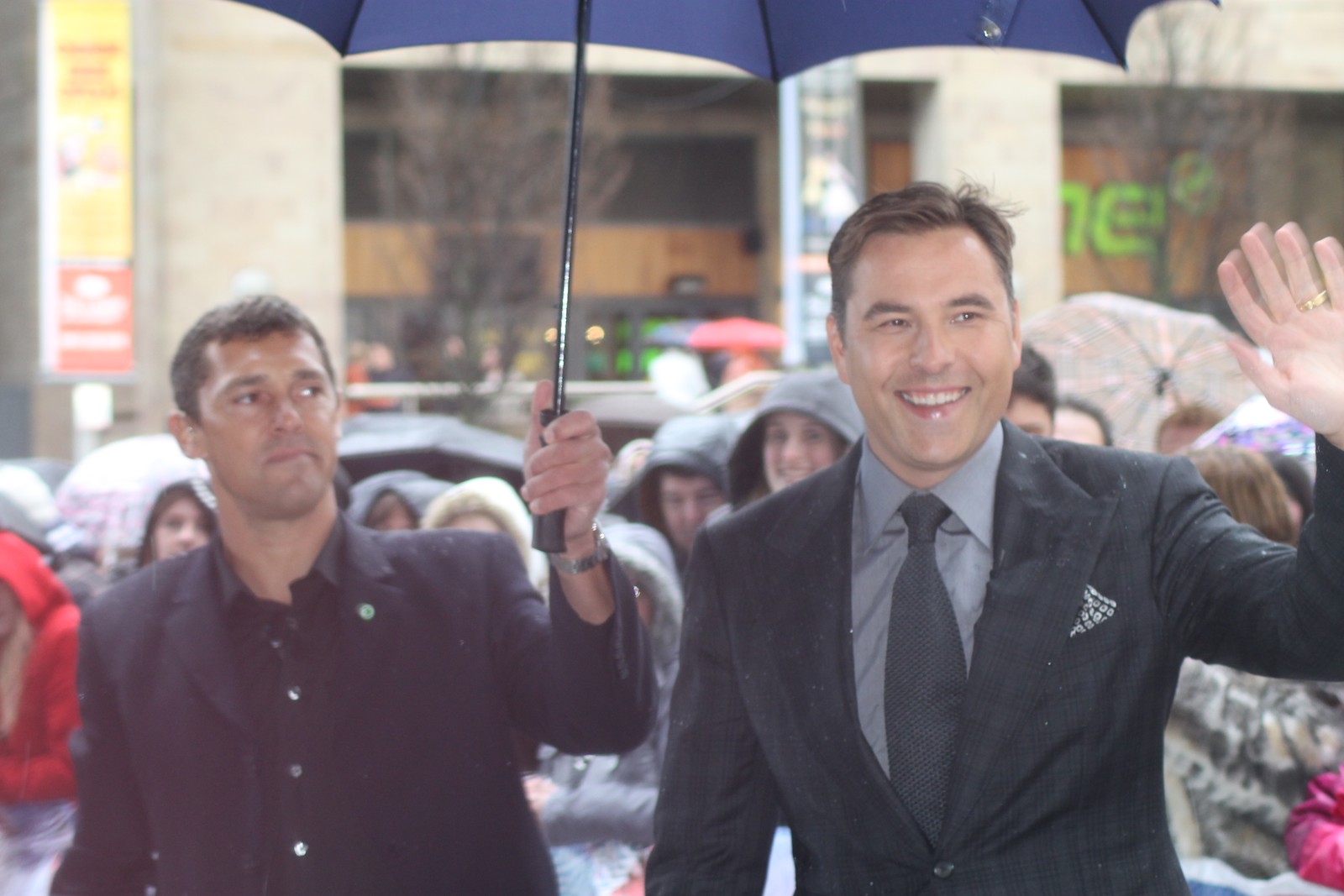
Photo: Sean Reynolds / Wikimedia Commons, CC BY 2.0
David Walliams, one of Britain’s best-known television personalities and children’s authors, has been accused of sexual misconduct by multiple women in a joint investigation by the Guardian and ITV News. The reports were published on Tuesday 10 November 2026, after a High Court judge refused his attempt to stop them appearing. Walliams denies the allegations.
The two organisations described the work as a three-year investigation. According to their reporting, several women, who the papers say do not know one another, have accused Walliams of using his fame and professional standing to pursue them for sex when they were teenagers or young women. Two women told the investigation they first met him when they were 15. Walliams, who is 55, has rejected the claims, saying he is “not a sexual predator” and has not broken the law.
The story is already having practical consequences. The BBC reports that his long-time literary agency, Independent Talent Group, confirmed it had dropped him after the investigation appeared. The corporation has removed Little Britain, the sketch show that made him famous alongside Matt Lucas, from BBC iPlayer. Sky has described the allegations as “extremely serious,” saying it is dropping a planned adaptation of his book Fing! and has already taken down other content featuring him.
What the investigation alleges
The most serious accounts, as summarised by the Guardian, the BBC and ITV News, involve two women who say they were 15 when they first had contact with Walliams. One woman, given the pseudonym Alex by the Guardian, said she met him at a Little Britain fan event in 2004 and that they later had sex when she was 17. She told the investigation she now believes she was groomed. Walliams has denied grooming her. He has not denied having sex with Alex, but told the publications he believed she was 18 at the time. He said he was “mortified” to learn that what he described as a brief, consensual relationship had caused her sadness.
Another woman, given the pseudonym Jade, alleged that she met Walliams in 2007, when she was 15 and he was 36, and that later, at his home, he kissed her and touched her sexually. She now characterises that encounter as a sexual assault and as grooming. Walliams has strongly denied any sexual contact with Jade, rejected allegations of criminal activity, and said he has never engaged in the grooming of young women.
Lilly Creightmore, who has waived anonymity, told the investigation and later BBC Newsnight that Walliams contacted her when she was 18, in 2003, and that she felt pressured and manipulated after accepting an offer to stay at his house. His lawyers said he denied grooming her or acting inappropriately, and that he had not “targeted” her because she was young or vulnerable. He has said he believed their friendship was a “special one” and felt devastated by her account.
Other women alleged unwanted advances, including a woman who said she was 19 and working as a model when Walliams tried to kiss her at his home. He has said he made a “clumsy pass” and made no further approaches. The investigation also reported claims of inappropriate behaviour linked to Britain’s Got Talent, where Walliams became a judge in 2012, including invitations to his dressing room. Syco Entertainment and Fremantle UK, the companies associated with the show, have said they were not aware of such complaints at the time.
The reporting also covers his former publisher, HarperCollins. The Guardian said the company dropped Walliams in December 2025 and announced earlier this year that it would no longer publish his back catalogue, after an internal inquiry into alleged inappropriate behaviour towards young women at work. The investigation claimed he had a sexual relationship with at least one junior employee, who later described it to colleagues as an abuse of power, and that he pursued another. Walliams denies sexually harassing anyone at the publisher or behaving inappropriately at work. His lawyers have said the relationships were consensual. The publisher has said it takes employee wellbeing “extremely seriously.”
Walliams’s response
In a letter to journalists working on the investigation, published by the Guardian and quoted by the BBC, Walliams wrote that, looking back, he realised he had at times “behaved thoughtlessly” towards people with whom he had casual sexual relationships, and that he regretted not always taking other people’s feelings properly into account. He drew a distinction between the power imbalance that, in his words, is “inevitable when one party is famous,” and the abuse of that power, which he said he never committed. “I am not a sexual predator,” he wrote. “I have not broken the law, but I am devastated that some of the women I met 10 to 20 years ago have now expressed hurt or anger towards me.”
His lawyers have said it is not true that he abused his power and celebrity to have sex with young women and teenagers, or that he acted as a sexual predator. They said he was devastated if any of the women who spoke to the investigation felt that way, and that he had not engaged in grooming.
Why the reports were held back, and what happened in court
The Guardian has reported that Walliams and his lawyers went to court after the news organisations approached him for comment in May, seeking to prevent the allegations being published. His lawyers argued that publication would be a serious risk to his life. They told the court that, after reading the letters setting out the claims, he attempted suicide, was treated in a psychiatric hospital, later absconded while on leave and made a second attempt. They said those actions were not a sign of guilt but a fear of public shame and “trial by media.” The court also heard that he had a significant psychiatric history before he was approached.
Mr Justice Nicklin heard the case in late October and, in a judgment handed down last week, refused the injunction. He ruled that the risk to Walliams’s life had to be taken seriously, but that the allegations were “matters capable of making a significant contribution to public debate,” and that the court could not stop the Guardian or ITV News from publishing them. Walliams did not appeal. The Guardian’s explainer, published on 11 November and updated on 12 November, said he is now being treated in a mental health facility.
The official response so far
The Metropolitan Police has told the BBC it contacted the Guardian and ITV News so that any potential victims would know how to report criminal allegations. At the time of the BBC’s report, the force said it had not received related reports of sexual assault or other offences. That is a statement about what had been reported to police, not a finding about the truth of the accounts.
It is important to be precise about what has and has not been established. The investigation has put serious allegations into the public domain. Walliams denies wrongdoing and has not been convicted of a crime in connection with these claims. Broadcasters and his agency have made their own decisions about his work. Those are facts about the fallout, not a substitute for a court verdict.
The coverage lands in a month already dominated by a separate criminal case, including this site’s reporting on Russell Brand’s sentencing. The two matters should not be treated as the same story. One has ended in a conviction and a prison sentence; the other, for now, is a set of contested allegations, a denied injunction, and an industry already withdrawing work. What happens next will depend on whether any criminal complaints are made, how Walliams’s remaining professional relationships hold, and how the public weighs testimony that the courts have now allowed to be heard.
About the Author