
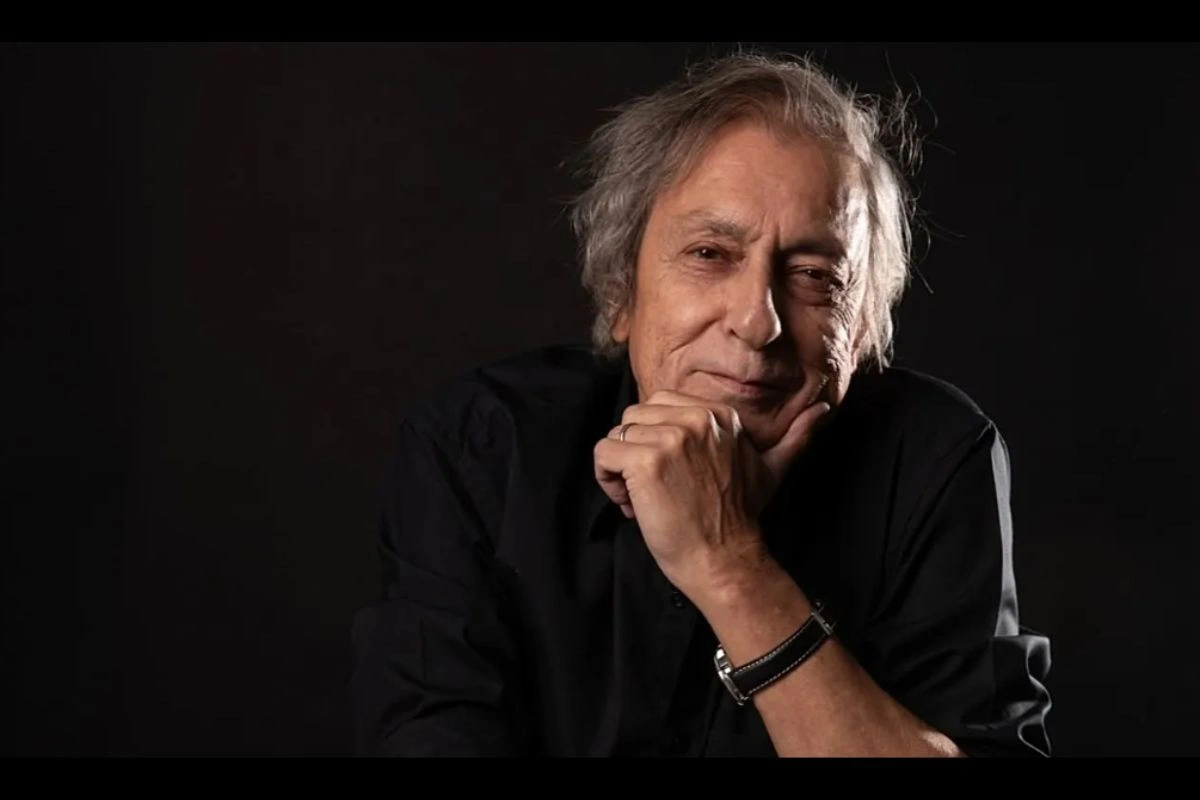
Jorge Palma, one of Portugal’s most respected singer-songwriters and a major figure in the country’s modern music scene, has died at the age of 76.
Palma died on Monday night following a cardiorespiratory arrest, according to a statement released by his family and representatives. His death marks the end of a musical career that lasted more than five decades and produced songs that became deeply associated with Portuguese popular culture.
In their announcement, Palma’s family described his death as a moment of profound grief and asked fans to remember him through the music and words that defined his career.
His wife, Rita Tomé, his sons Vicente and Francisco Palma, and his representatives André Sebastião and Tiago Branco were named in the statement. The family also expressed gratitude for the messages of affection and support Palma received throughout his career.
They said the musician leaves behind an extensive body of work that forms an important part of Portuguese music history, along with friendships and professional relationships that extended far beyond Portugal.
A Musical Journey That Began in Childhood
Born in Lisbon in 1950, Jorge Palma developed an interest in music at a remarkably young age.
He began studying music when he was only six years old. Four years later, he entered the Lisbon Music Conservatory, where he received formal training.
However, his musical ambitions eventually moved away from classical music. At 14, Palma decided that he wanted to explore pop and rock instead, setting him on a path that would eventually make him one of Portugal’s distinctive singer-songwriters.
Before becoming widely known as a solo performer, Palma gained experience through various musical projects.
He was involved with the band Sindicato, which performed at the inaugural Vilar de Mouros Festival in 1971. He also played with Black Boys and developed skills in composition, orchestration and recording.
Those early experiences helped establish the broad musical foundation that would later become evident in his solo work.
His First Solo Release
Palma launched his solo recording career in 1972 when he was 22 years old.
His first single, “The Nine Billion Names of God,” introduced audiences to an artist who would eventually develop a distinctive voice within Portuguese songwriting.
Soon afterward, Palma faced military service. Rather than remaining in Portugal, he left the country and moved to Denmark.
His time abroad became another important chapter in his development as a musician.
Following Portugal’s 25 April Revolution in 1974, Palma returned home. He began working professionally as an orchestrator and continued developing his own material.
In 1975, he released his first album, “Como uma viagem na palma da mão.”
The record marked the beginning of an extensive solo discography that would eventually include 14 albums of original material.
Songs That Reflected His Life
One of the defining characteristics of Palma’s career was the personal nature of his songwriting.
His records often reflected the circumstances and experiences surrounding the periods in which they were created. Palma once explained that his music was shaped by the people he met, the places where he lived, his daily experiences, books, music and the wider world around him.
That approach helped his songs connect with different generations of Portuguese listeners.
Among the best-known titles associated with his career are “Deixa-me Rir” and “A Gente Vai Continuar,” songs that helped cement his reputation as a powerful storyteller and songwriter.
Rather than following a single musical formula, Palma moved between different styles and projects throughout his career.
Returning to the Piano
During the 1980s, Palma returned to formal piano studies at the Lisbon Music Conservatory.
He completed his studies in 1990.
A year later, he released “Só,” a project built around piano performances of songs from the previous two decades of his career.
The album offered a different perspective on his songwriting, stripping the arrangements down and allowing the melodies and lyrics to take centre stage.
It also became the first compilation-style project of his career.
Exploring New Musical Projects
The 1990s brought another period of experimentation.
Palma joined forces with musicians including Zé Pedro and Kalu of Xutos & Pontapés, as well as Flak and Alex Cortez of Rádio Macau, to form Palma’s Gang.
His creative work also expanded beyond his own records. He composed music for theatrical productions and wrote material for other performers.
He later became part of Rio Grande, another significant project in his career.
These collaborations demonstrated that Palma’s influence was not restricted to his solo recordings. He was also an important creative presence within Portugal’s broader music community.
A New Century and More Albums
After a decade filled with collaborations and other projects, Palma returned to recording original solo material.
In 2001, he released “É proibido fumar.”
The album was followed by several more releases, including “Norte” in 2004, “Voo nocturno” in 2007 and “Com todo o respeito” in 2011.
His final studio album, “Vida,” arrived in 2023.
By then, Palma had spent more than 50 years creating music and had established himself as an artist whose career crossed generations.
Recognition for a Distinguished Career
Palma’s contribution to Portuguese music was recognised through numerous awards and honours.
In 2002, he received the José Afonso Prize for his self-titled album “Jorge Palma.”
A decade later, he became the first recipient of the Pedro Osório Prize, presented by the Sociedade Portuguesa de Autores, for “Com todo o respeito.”
His achievements were also recognised at the municipal and national level.
In 2020, the Lisbon City Council presented Palma with its Medal of Cultural Merit. The honour came at the end of a concert celebrating his 70th birthday.
That same year, then-President Marcelo Rebelo de Sousa awarded Palma the rank of Commander of the Order of Infante D. Henrique.
The honour recognised his contribution to Portuguese culture and the arts.
His Final Major Recognition
Even near the end of his career, Palma continued to receive recognition from the Portuguese music industry.
In April, he received the Career Award at the eighth edition of the PLAY – Prémios da Música Portuguesa.
The award was granted following a decision by the board of Audiogest, the organisation representing and managing rights for multinational, national and independent record labels.
The recognition served as another acknowledgement of Palma’s lasting contribution to Portuguese music.
A Lasting Legacy
Jorge Palma leaves behind a career defined by musical exploration, collaboration and songwriting.
From his early classical training and teenage decision to pursue rock and pop to his decades as a solo artist, Palma continually evolved while maintaining a strong personal identity.
He worked as a performer, songwriter, composer and arranger, while also contributing to theatre and collaborating with some of Portugal’s best-known musicians.
His songs, particularly works such as “Deixa-me Rir” and “A Gente Vai Continuar,” will remain an important part of his musical legacy.
It has been a hard year for the arts on both sides of the Atlantic, with Hollywood also mourning Robert Duvall, who died at 95.
With his death at 76, Portuguese music has lost an artist whose career stretched across more than five decades.
For his family, colleagues and generations of listeners who followed his work, Palma’s music will now serve as the enduring record of a remarkable life devoted to songwriting and performance.
Related reading
- Queen unveil long-lost festive track ‘Not For Sale (Polar Bear)’ after five decades
- John Travolta Debuts First Film at Cannes Festival 2026
- Richiegaps Top 10 Music Albums: Definitive Discography & Sound
- Taylor Swift: The Global Music Icon Whose Brand Value Extends Far Beyond the Stage
About the Author