
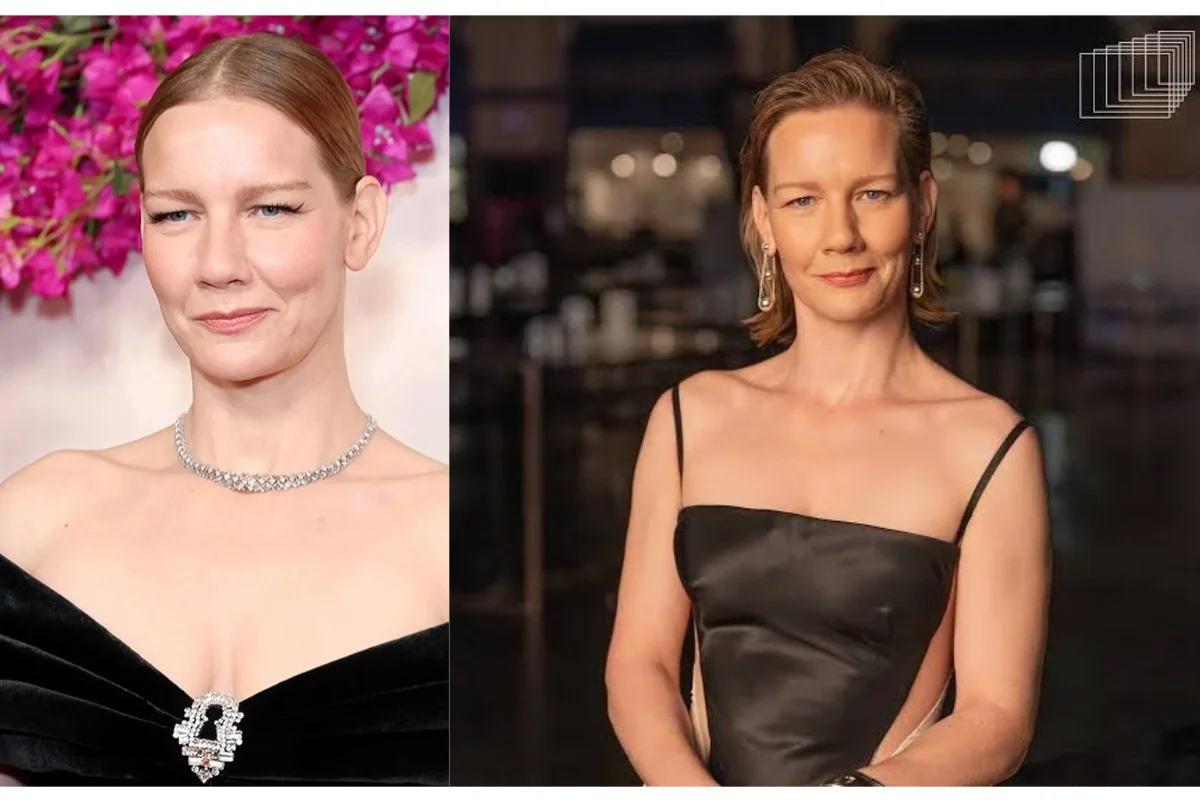
Sandra Hüller
The 39th European Film Awards now have their shortlists, and the shape of the race is unusually clear. Announced on Saturday at the Thessaloniki International Film Festival, in front of a live audience at the Pavlos Zannas Theatre in the Olympion, the nominations put two Cannes prizes at the front of the field and give Sandra Hüller a rare double chance in a single acting category.
Paweł Pawlikowski’s Fatherland leads with 11 nominations. Just behind it is La Bola Negra, the Spanish epic from Javier Ambrossi and Javier Calvo, with 10. Cristian Mungiu’s Fjord, this year’s Palme d’Or winner, follows with five. Markus Schleinzer’s Rose has four. The winners will be named in Athens on 16 January 2027, after a vote by the European Film Academy’s 5,700 members.
For a winter already thick with national prize conversations, this is the pan-European scoreboard: a set of names that runs from established auteurs to a first-time leading actress, and from a Thomas Mann family drama to a Lorca-inspired sweep through Spanish history.
Two films, a shared Cannes prize, and a crowded top tier
Fatherland is a German-set period drama about the relationship between Thomas Mann and his daughter Erika. It is a Polish, German, Italian and French production, and it has been nominated across the board: best film, director, screenwriter, cinematographer, and acting nods for Hüller and for Hanns Zischler. Pawlikowski, whose Ida and Cold War already belong to the recent European canon, is in the director race with a film that the academy has clearly decided is the one to beat.
La Bola Negra is a time-spanning work drawn from Federico García Lorca, and it has been similarly embraced: best film, director, screenplay, cinematography, plus a run of craft nominations that underlines how completely the academy fell for its design, costume, makeup, sound and editing. Ambrossi and Calvo shared the best director prize at Cannes with Pawlikowski, a split that the EFA list now essentially repeats. Their co-writers include Alberto Conejero.
Fjord, a Romania-led co-production with France and a cluster of Nordic partners, arrives with the Palme still attached and with five nominations, including film, director, screenplay, and acting nods for Renate Reinsve and Sebastian Stan. Rose, with four, gives Hüller her second track through the actress category. Woman Unknown, May el-Toukhy’s Golden Lion winner from Venice, has three nominations, including best film and a best actress place for Mathilde Arcel, whose own sudden rise is a story in itself and deserves to be told as one, rather than as a footnote here.
The rest of the best-film list is wider than the headline trio. It folds in the documentary and animation nominees as well as fiction titles such as Marine Atlan’s La Gradiva. In the documentary race, the names include NAZA, Letters from the Silenced Country, Rehearsals for a Revolution, To Hold a Mountain and Whispers in the Woods. Animation is a largely Franco-Belgian slate: In Waves, Iron Boy, Jim Queen, Lucy Lost and Viva Carmen. It is a reminder that “European film,” for this academy, is not only the prestige drama that fills the acting categories.
The acting lists, and Hüller’s unusual double
The most striking personal result belongs to Hüller. She is nominated twice for European Actress, for Fatherland and for Rose, and will therefore appear on the same list as herself. The rest of the category is a roll call of European screen power: Penélope Cruz for Bunker, Léa Seydoux for Gentle Monster, Renate Reinsve for Fjord, and Arcel for Woman Unknown. Six names, one of them written down twice, is an unusually rich field even by EFA standards.
European Actor is no thinner. Javier Bardem is nominated for The Beloved, Andrew Scott for Elsinore, Sebastian Stan for Fjord, Swann Arlaud for A Man of His Time, and Zischler for Fatherland. Scott’s presence, in a film titled after Hamlet’s castle, will interest anyone watching the Irish actor’s recent run of high-prestige work. Bardem and Cruz appearing in the same season, in different films, keeps a familiar Spanish pair in the continental conversation even when they are not sharing a frame.
The director list matches the top of the table and then adds two more exacting names: Sandra Wollner for Everytime, and Andrey Zvyagintsev for Minotaur, the film that took Cannes’ Grand Prix. The screenplay nominations follow a similar pattern, with Pawlikowski sharing a writing credit with Henk Handloegten, and Zvyagintsev with Simon Liashenko. These are not surprise guests. They are the filmmakers the academy has decided represent the year.
What the nominations say about the season
Awards lists can flatter a narrow taste. This one, at least, has a geography to it. Poland and Germany sit at the top through Fatherland. Spain is right there with La Bola Negra. Romania’s Palme winner is in the mix. Denmark is present through Woman Unknown, which is also the country’s submission for the next Academy Awards. France appears everywhere, as co-producer, as animation engine, as the industry that still makes the machinery of European film move. That last point has been part of the autumn conversation already, including this site’s look at how Spanish and French audiences and awards races have been shaping the year.
There is also a craft story that will matter in January, even if it never trends as widely as the acting names. Fatherland and La Bola Negra have carved up cinematography, production design, costume, makeup, sound and editing between them, with Łukasz Żal among the camera nominees and a deep Spanish craft team behind the Lorca film. Bunker, Coward, Elsinore, Everytime and Minotaur each picked up two nominations, enough to keep them in the room without threatening the lead pair’s dominance.
The Discovery prize, given with FIPRESCI for a first full-length fiction film, pulls the map wider still: titles from North Macedonia, the United Kingdom, Denmark, France and Palestine are on that list. It is the part of the announcement most likely to be skipped in a celebrity recap, and the part that often produces the name people will be talking about a year from now.
What the academy has not done is scatter its affection. Eleven and ten nominations are commanding totals. They suggest a year in which two films have been taken as the serious work, with a Palme winner in close attendance and an acting category deep enough to absorb a double nomination without looking thin. Athens in mid-January will decide who actually leaves with a trophy. For now, the story is the board itself: Hüller in two places at once, Pawlikowski and the Spanish pairing back in a familiar duel, and a European awards season that has, at last, a set of official names to argue about.
About the Author




2 thoughts on “Sandra Hüller’s Rare Double Nod as Fatherland and La Bola Negra Lead the European Film Awards”