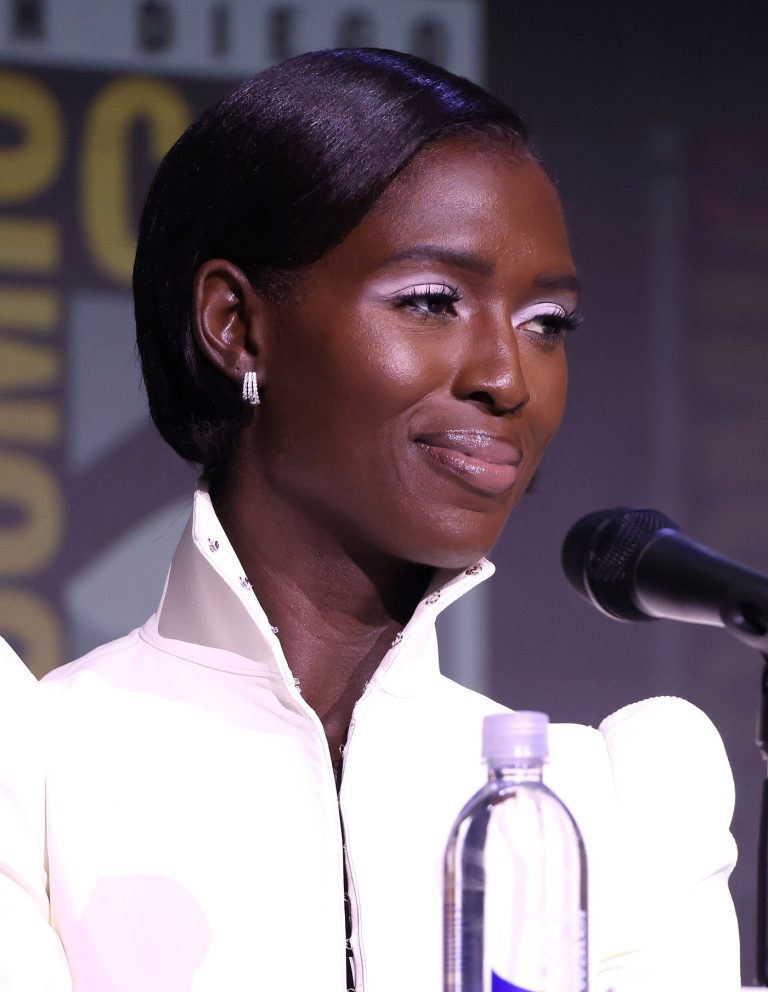

Ask around a seaside cafe in Naples, Marseille or Seville and you will hear a familiar idea: European men celebrate curves, while America chases thinness or surgically sculpted shapes. It is a fun talking point, but is it true? The research tells a richer story. Beauty ideals really do differ by place, by media diet and by era, yet no single continent owns one taste. Here is what the studies, the surveys and a century of cinema actually say.
Where the “Europe loves curves” idea comes from
Much of the reputation is cultural memory. Post-war Italian cinema made stars of women whose figures were the opposite of a catwalk silhouette. Sophia Loren and Gina Lollobrigida became global symbols of Mediterranean glamour in the 1950s and 1960s, and later Monica Bellucci carried that image into modern film and fashion campaigns. Their screen presence linked sensuality with confidence, maturity and a full figure, and that association stuck to the idea of Europe itself.
Food culture adds to the picture. The Mediterranean table is built around long shared meals, bread, olive oil and wine, and in popular imagination that lifestyle sits comfortably with soft, natural bodies rather than gym-sculpted ones. Those images are romantic generalisations, not data, which is why it is worth turning to the research.
Celebrity romance coverage feeds the myth too. Our look at sports stars and their starlet romances shows how often European tabloids celebrate glamorous couples, and those images shape what readers think a “European type” looks like.
What the science says about body preferences
The International Body Project: 26 countries, 7,434 people
The largest study of its kind is the first International Body Project, led by psychologist Viren Swami and David Frederick with 58 researchers. Published in Personality and Social Psychology Bulletin in 2010, it surveyed 7,434 people (4,019 women and 3,415 men) at 41 sites in 26 countries across 10 world regions. Participants rated nine line drawings of the female figure, from very slender to very heavy.
Three findings matter here. First, the paper reports that participants in Eastern Europe, Western Europe and Scandinavia rated heavier female figures more favourably than participants in several other regions. That is the closest thing the science offers to support for the “Europe likes curves” idea. Second, the authors stress that differences between wealthy, high-income sites were statistically significant but small, so the gap between Europe and North America is far narrower than café talk suggests. Third, across the whole sample, men preferred a heavier female figure than women believed men preferred. In other words, many women overestimate how thin men want them to be, on both sides of the Atlantic.
The study also found that greater exposure to Western media predicted a preference for thinner bodies, and that body dissatisfaction and a desire for thinness were common in high-income settings across every region studied, as summarised on PubMed. Media, not geography alone, seems to move the needle.
Waist-to-hip ratio: shape over size
Another strand of research focuses on proportion rather than weight. In a much-cited 1993 paper in the Journal of Personality and Social Psychology, psychologist Devendra Singh showed men 12 line drawings that varied body weight and waist-to-hip ratio (0.7, 0.8, 0.9 and 1.0). Men tended to rate normal-weight figures with a lower waist-to-hip ratio as more attractive and healthier. A later experiment summarised on PubMed, using rapid, spontaneous judgments, again found men preferred a normal-weight figure with a 0.7 ratio.
This helps explain why an hourglass shape has been admired in many eras and places, from Renaissance painting to 1950s Hollywood. It is a preference for a defined waist relative to the hips, which can appear on slim and full figures alike. It is not a European invention, and researchers continue to debate how universal it is.
What surveys say: Europe is not one country
Large surveys complicate the neat transatlantic story. A comparison of body-shape ideals published by France’s national demographic institute in Population and Societies, based on about 20,000 people in 13 countries from the International Social Survey Programme, found huge variety inside Europe. In Ireland, a majority chose the fullest figure as the ideal for both sexes (54 per cent for the female ideal). In France, by contrast, 52 per cent picked the slim female figure. The authors place Slovakia, Bulgaria and France among countries where slimness is valued more in women than in men.
In Britain, a YouGov body image study found 40 per cent of men said they were more attracted to slimmer women and 10 per cent said larger women. The same poll found 69 per cent of Britons think physical beauty is subjective, and 83 per cent believe the media promotes unattainable body images for women.
So the honest answer is that “Europe” contains many beauty cultures. Mediterranean and Irish respondents may lean fuller in some data, while French and British samples often lean slimmer. Taste also shifts with age: a multi-country YouGov study found body image tends to improve as people get older, and reported that only 52 per cent of American women were happy with their looks, compared with 63 per cent of American men.
The American contrast: thin ideal, BBL era and Ozempic
The United States has cycled through very visible body trends. The Washington Post traced how the toned 1980s look gave way to the “heroin chic” of the 1990s and then to a curvier, surgically enhanced shape that dominated social media feeds, the era of the Brazilian butt lift and the Kardashian aesthetic. By late 2024, plastic surgeons quoted by The Washington Post were describing a new “ballet body” trend, with thinness returning, fuelled in part by GLP-1 drugs such as Ozempic and Wegovy. Our coverage of Kim Kardashian’s rumoured romance with Lewis Hamilton shows how closely Europe still watches that American celebrity culture.
Fashion runways mirrored the shift on both continents. According to Vogue Business data reported by Newsweek, of 8,800 looks across 230 shows in the Autumn/Winter 2024 season, just 0.8 per cent were plus-size and 3.7 per cent were mid-size, while 95.5 per cent were straight-size. That included Milan and Paris, not just New York. Europe’s catwalks, in other words, are not a curvy paradise either.
European body positivity: laws, models and pushback
Where Europe does stand out is regulation. France now requires the label “Photographie retouchée” on commercial images of models whose silhouette has been digitally slimmed or widened, a rule that took effect on 1 October 2017, as reported by WWD. Under the French public health code on Légifrance, breaking the rule can bring a fine of 37,500 euros, rising to 30 per cent of the advertising spend. Models working in France also need a medical certificate that considers body mass index, and the French medical press noted that Spain, Italy, Belgium, Chile and Israel had already taken similar steps.
Curve models are pushing back too. Speaking to DW, German-Turkish curvy model Khan said that “since a year and a half, we are seeing less curvy models on the runways”, yet when asked whether the Ozempic hype means the end of body positivity, her answer was: “No, not in a million years.”
So why does the stereotype persist?
Several things are probably happening at once:
- Iconic imagery. Italian and French cinema gave the world unforgettable images of full-figured glamour, and pop culture keeps recycling them.
- Proportion, not size. Research on waist-to-hip ratio suggests many people admire a defined waist and hips, which reads as “curvy” whatever the scale says.
- Media exposure. The International Body Project linked heavier Western media exposure with thinner ideals, so local media culture can matter more than nationality.
- Perception gaps. Men in the same study preferred heavier figures than women assumed, which means confidence may be more attractive than many people think.
- Lifestyle romance. The slow Mediterranean meal, the evening passeggiata and a relaxed attitude to food make a tempting contrast with diet and gym culture.
Dating culture plays a role as well. Our guide to the biggest dating apps in Europe shows how varied romantic preferences are across the continent, and the stars in our list of out and proud European celebrities are a reminder that attraction comes in many forms that no single ideal can capture.
The bottom line
There is some evidence that European samples, on average, rate fuller female figures a little more favourably than some other regions, and Europe has gone further than the United States in regulating retouched advertising. But the differences are modest, Europe is far from uniform, and trends swing quickly on both sides of the Atlantic. Curvy is iconic in Europe because of its films, its food culture and its fashion history, not because every European man shares one taste.
A closing note from the desk: attraction is personal, and every body is beautiful. Slim, curvy, athletic or anything in between, the most admired quality in nearly every culture remains confidence.
Frequently asked questions
Do European men really prefer curvy women?
Not as a rule. The International Body Project found participants in Eastern Europe, Western Europe and Scandinavia rated heavier female figures somewhat more favourably than several other regions, but differences among high-income sites were small and preferences vary widely by person and country.
Is the US ideal thinner than Europe’s?
It depends on the era and the data. The US has swung from 1990s thinness to a curvier BBL era and, by 2024, back toward slimness linked to GLP-1 drugs, while surveys show France and Britain often lean slim too.
What is the waist-to-hip ratio research?
Studies led by Devendra Singh in 1993 found men tended to rate normal-weight figures with a lower waist-to-hip ratio, often 0.7, as more attractive. It describes proportion, not body size.
Does any European country regulate thin images in ads?
Yes. Since 1 October 2017, France has required the label “Photographie retouchée” on commercial model photos whose silhouette has been digitally altered, with fines of up to 37,500 euros.
Which European stars are seen as curvy icons?
Italian actresses Sophia Loren, Gina Lollobrigida and Monica Bellucci are the classic examples of Mediterranean screen glamour often cited in discussions of European beauty ideals.
Related reading
- The biggest dating apps in Europe
- Celebrities who own superyachts in the Mediterranean
- Kate Winslet: biography, lifestyle and net worth
- The world’s most luxurious cruises 2026 to 2027 (Global Celebrity Meter)
About the Author